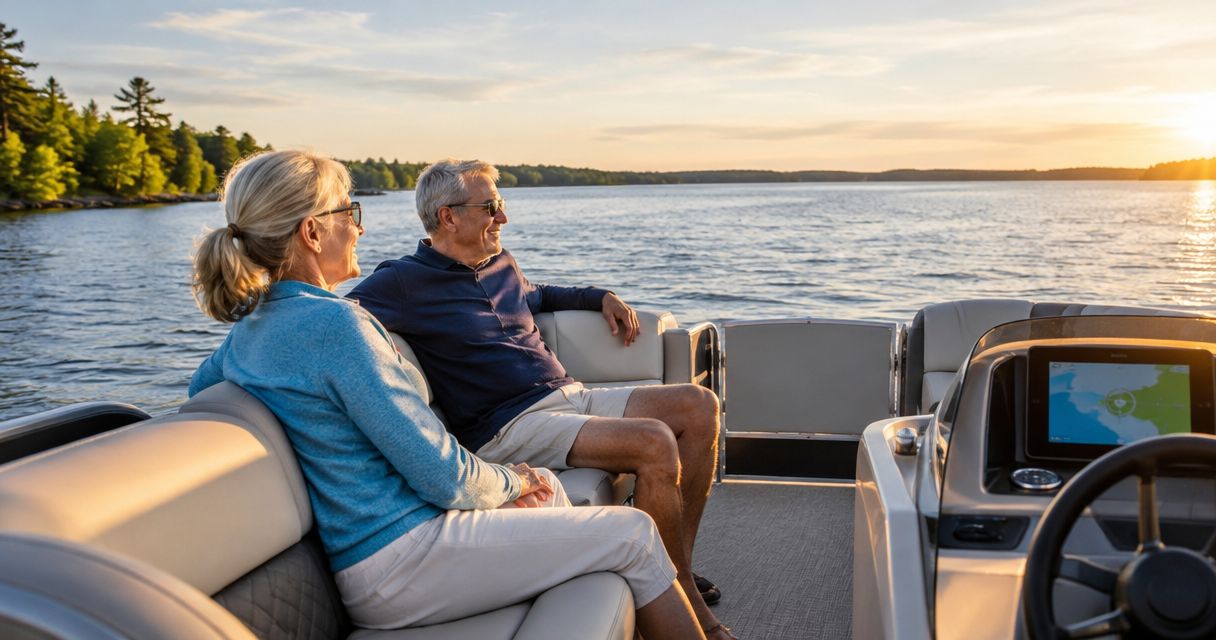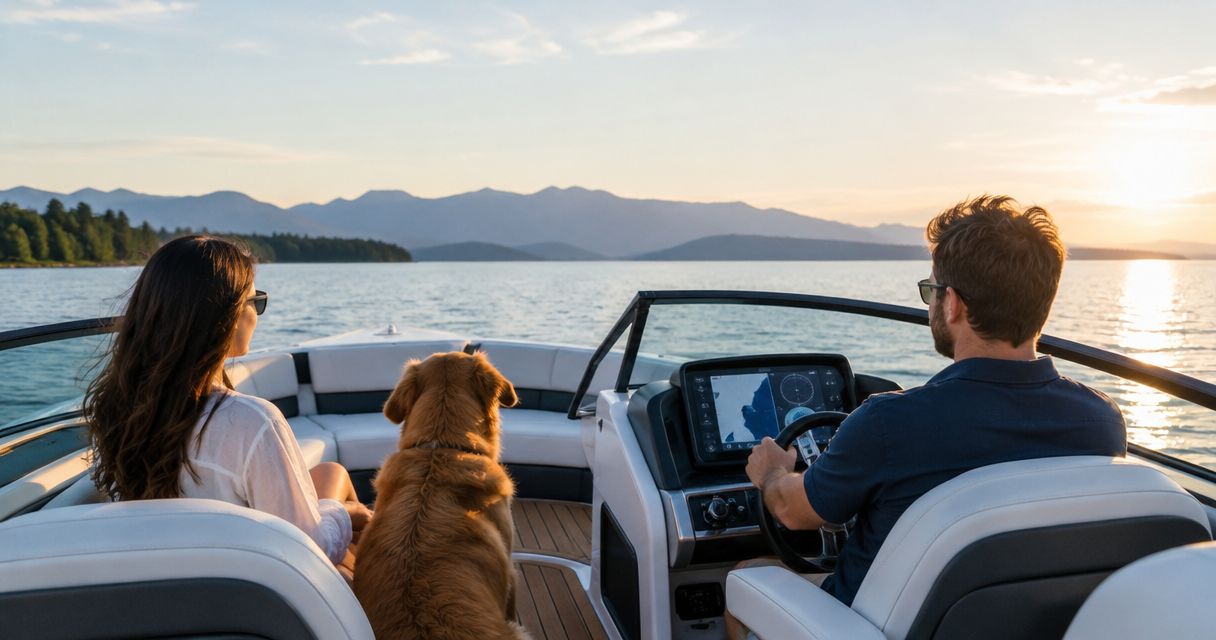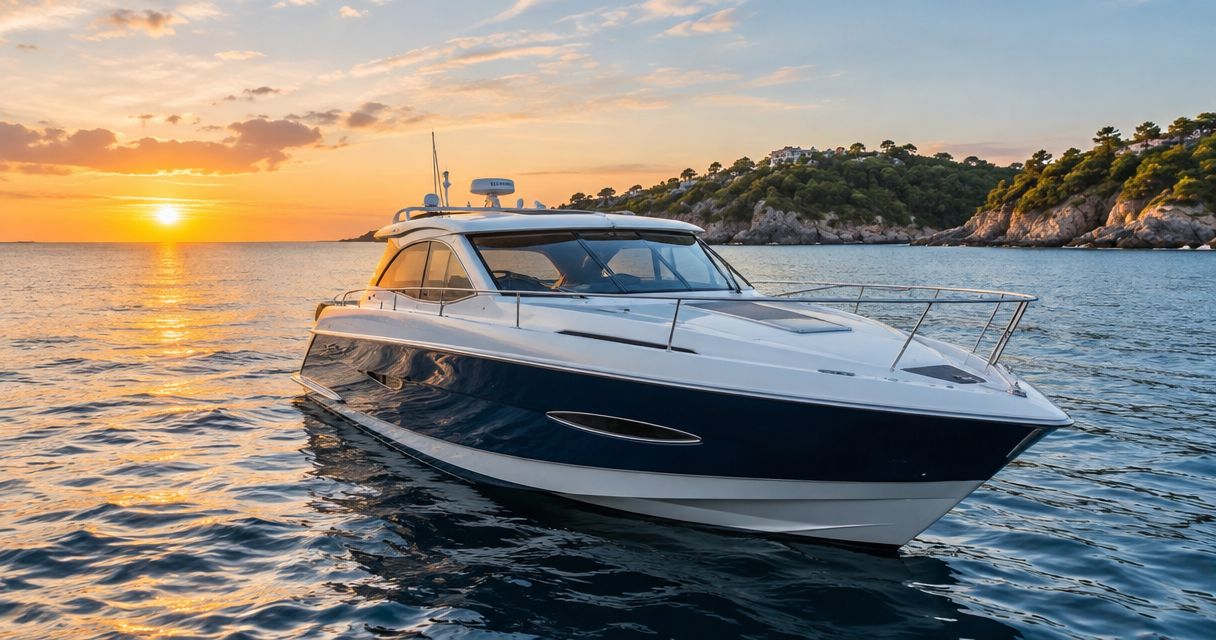
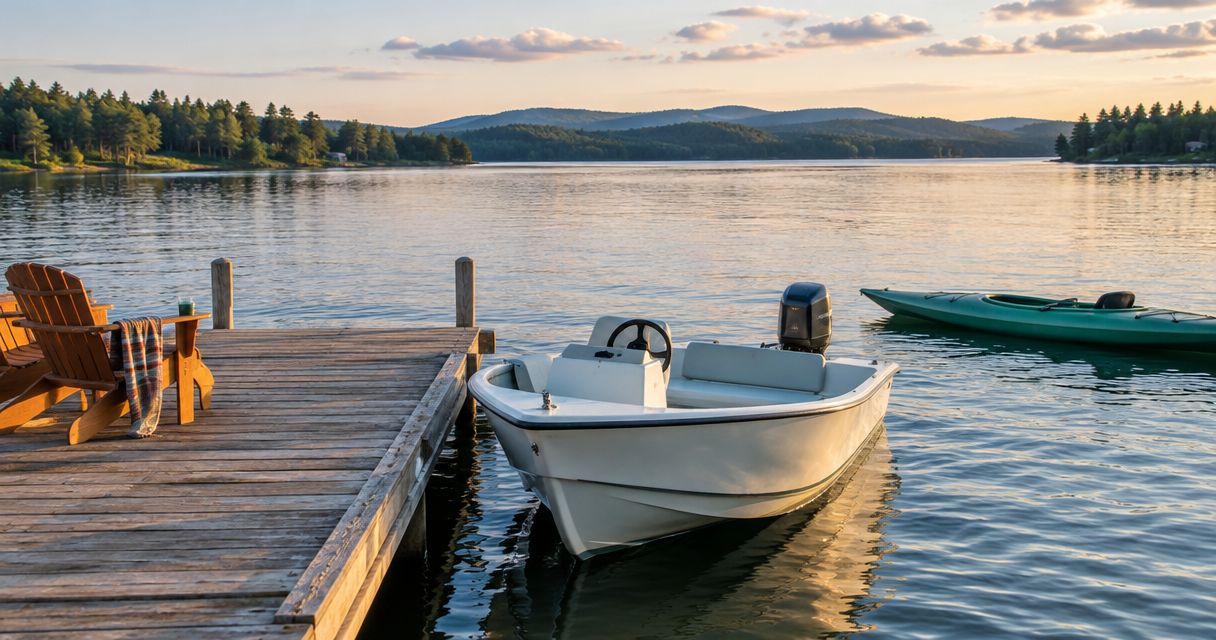
Best overall: a compact bowrider. Best for fishing: a small aluminum fishing boat. Best for easy boarding: a compact pontoon. The best compact boats for small lake docks in 2026 are the boats that fit your usable berth, leave room for docking, and suit what you actually do on the water.
- For best compact boats for small lake docks 2026, start with a bowrider for mixed-use lake days.
- Choose a small aluminum fishing boat when casting space matters more than passenger seating.
- Choose a compact pontoon for boarding convenience only after checking its width against your dock opening.
- Measure the complete boat, including its motor and platforms, before choosing a berth or lift.
Why this matters
A boat can fit beside a dock and still be awkward to use. An outboard can project beyond the stern, a swim platform can extend beyond the hull, and a narrow entrance can make an otherwise suitable slip difficult to enter.
D1 Automotive and Marine is a boat dealership for Seneca-area buyers choosing compact boats for lake use. The dealership offers new and used boat sales, consignment, and detailing; start your search with D1 Automotive and Marine after you have measured your dock.
This 2026 guide ranks boat types rather than individual models. A model name alone cannot establish whether a particular boat fits your dock, especially when engines, platforms, towers, and accessories change the space it needs.
What makes the best compact boat for a small dock?
Judge each candidate against these criteria before comparing seating or accessories:
- Complete length: Measure the actual boat from its forwardmost attachment to its rearmost projection in the intended storage position.
- Usable width: Compare the boat's widest point with the clear opening between pilings, bumpers, and other obstructions.
- Approach space: Check whether you can line up with the berth without a tight turn beside another boat.
- Boarding access: Make sure passengers can step aboard at the place where the boat will actually sit.
- Storage compatibility: Confirm lift capacity, bunk arrangement, water depth, and overhead clearance where applicable.
- Lake-day purpose: Choose fishing space, social seating, or general recreation deliberately. Small boats have less room to serve competing purposes.
Dock fit is a pass-or-fail requirement, not a feature to trade away for extra seating. A shorter boat with the wrong width or boarding arrangement is still the wrong boat.
Compact boats at a glance
| Rank and boat type | Best for | Standout feature | Key limitation |
|---|---|---|---|
| 1. Compact bowrider | Mixed-use lake days | Bow seating and a conventional cockpit | Platforms and drive hardware affect the storage footprint |
| 2. Small aluminum fishing boat | Fishing-first owners | Open working space for fishing | Fishing layouts prioritize gear over social seating |
| 3. Compact pontoon | Boarding and relaxed conversation | Deck-style layout with perimeter seating | Short length does not guarantee a narrow beam |
| 4. Small utility skiff | Simple dock-to-dock trips | Open layout with straightforward access | Limited shelter and passenger amenities |
| 5. Compact jet boat | Owners who specifically want jet propulsion | No exposed propeller behind the boat | Low-speed handling requires familiarity with jet controls |
These are use-case rankings, not claims that every boat within a category has the same dimensions or equipment. Check the exact example you intend to buy.
1. Compact bowrider: best for mixed-use lake days
A compact bowrider is the default choice when your plans include cruising, swimming stops, and carrying passengers. Seating ahead of the windshield adds another passenger area without turning the entire cockpit into a lounge.
For a small dock, inspect the stern carefully. A swim platform, sterndrive, or outboard affects how the boat sits beside pilings and how passengers reach the dock. Compare the complete storage footprint, not just the hull-length description.
Compact bowrider pros:
- Separate bow and cockpit seating areas support different passenger arrangements.
- A windshield provides some protection for occupants seated behind it.
- The layout suits general lake recreation without dedicating the boat to fishing.
Compact bowrider cons:
- Bow seating takes space that a fishing-first owner might prefer for casting.
- Stern equipment can complicate an apparently simple length comparison.
Best for: Owners who want a general-purpose recreational boat rather than a specialized fishing or watersports layout.
Verdict: Buy a compact bowrider if its complete footprint fits and your lake days involve mixed activities.
2. Small aluminum fishing boat: best for fishing-first owners
A small aluminum fishing boat puts fishing access, tackle storage, and usable working space ahead of lounge seating. Depending on the configuration, you will encounter tiller steering, a side console, or another compact control arrangement.
Look beyond the boat's length. Rod tips, a trolling motor, an outboard, and raised fishing seats can interfere with dock lines, covers, or overhead storage. Walk through your boarding route with the fishing equipment in its normal position.
Small aluminum fishing boat pros:
- Fishing-focused layouts keep equipment close to the angler.
- Open working areas support casting and handling a catch.
- Different steering layouts let you prioritize cockpit space or a seated helm.
Small aluminum fishing boat cons:
- Fishing seats and casting decks are not substitutes for comfortable social seating.
- Low-sided, open designs provide less shelter than enclosed layouts.
Best for: Owners whose main reason for leaving the dock is fishing rather than entertaining.
For your 2026 shortlist, prioritize a layout you can board safely with rods and tackle aboard. An empty display boat does not show how fishing equipment changes movement around the deck.
Verdict: Buy a small aluminum fishing boat when fishing access matters more than passenger lounging.
3. Compact pontoon: best for boarding and conversation
A compact pontoon organizes seating and movement around a deck rather than a deep cockpit. That arrangement deserves attention when your priority is stepping aboard, sitting together, and taking relaxed lake trips.
The main small-dock check is width. A pontoon described as compact can still be unsuitable for a narrow opening, and the boarding gate must line up with a usable part of your dock. Confirm that the lift supports the specific boat configuration rather than assuming an existing lift will work.
Compact pontoon pros:
- Deck-style layouts provide a clear basis for planning passenger movement.
- Perimeter seating supports face-to-face conversation.
- Boarding gates provide defined entry points to compare with dock access.
Compact pontoon cons:
- Beam can eliminate a candidate even when length looks suitable.
- An open-sided profile gives wind more surface to push during docking.
Best for: Owners who prioritize boarding access and seated social time over a fishing cockpit.
Ask D1 Automotive and Marine to keep dock width and boarding position central to your compact-boat search. Extra seating is not useful if the gate faces a piling or passengers cannot step aboard comfortably.
Verdict: Buy a compact pontoon only after its width, boarding gate, and storage arrangement pass your dock checks.
4. Small utility skiff: best for simple dock-to-dock trips
A small utility skiff is worth considering when you want an uncomplicated open boat rather than a passenger-focused recreation layout. Bench seating and an open interior suit basic trips and carrying ordinary boating gear.
The simple layout also exposes its limitations. Check the actual seating, handholds, and boarding arrangements instead of treating an uncluttered interior as automatic accessibility. Hull shape and conditions matter; a small open skiff is not interchangeable with a larger recreational boat.
Small utility skiff pros:
- An open layout makes the interior easy to inspect.
- Limited fixed furniture leaves flexible space for gear.
- A straightforward arrangement suits owners who do not need entertainment features.
Small utility skiff cons:
- Basic seating provides fewer passenger amenities than lounge-oriented layouts.
- Open designs offer limited protection from sun, spray, and weather.
Best for: Owners making simple trips who value an uncluttered boat over passenger comforts.
Do not choose a skiff solely because it occupies less dock space. Your normal route, passenger needs, and expected conditions still determine whether the particular hull is suitable.
Verdict: Buy a small utility skiff for simple trips; skip it when passenger comfort is your main requirement.
5. Compact jet boat: best for buyers choosing jet propulsion
A compact jet boat uses a waterjet rather than an exposed propeller behind the boat. That propulsion layout is a reason to consider the category, but it does not prove that a jet boat is the easiest option for a tight berth.
Waterjet steering depends on directed thrust. Assess the specific boat's low-speed response, reverse controls, and approach behavior before deciding it suits your dock. Keep swimmers clear of operating propulsion equipment regardless of drive type.
Compact jet boat pros:
- Waterjet propulsion removes the exposed rear propeller found on conventional outboard and sterndrive arrangements.
- Recreational layouts can combine cockpit seating with bow seating.
- The category offers an alternative for buyers deliberately seeking jet propulsion.
Compact jet boat cons:
- Low-speed control differs from propeller-driven boats and requires practice.
- The intake requires attention to debris and the manufacturer's operating instructions.
Best for: Buyers who want jet propulsion and will learn the controls before using a confined berth.
For 2026, treat an on-water handling demonstration as part of the selection process, not as something to investigate after purchase.
Verdict: Hold until you have assessed the specific jet boat's low-speed handling.
Check your dock before choosing a boat
Start with 3 measurements: usable length, clear width, and water depth. Record overhead clearance separately if your dock has a roof, lift canopy, or other obstruction. Use actual measurements rather than estimates from photographs.
Follow this sequence for each candidate:
- Measure the berth. Identify the space the boat can occupy without blocking a walkway, ladder, neighboring berth, or boarding point.
- Check the approach. Examine the entrance from both directions and identify where you must turn or stop.
- Measure the boat. Include projections and confirm the intended motor, platform, windshield, and tower positions.
- Verify storage. Match the boat's loaded weight and support requirements to the lift manufacturer's instructions, where a lift is used.
- Practice docking. Evaluate the boat's response in open water before attempting a confined approach.
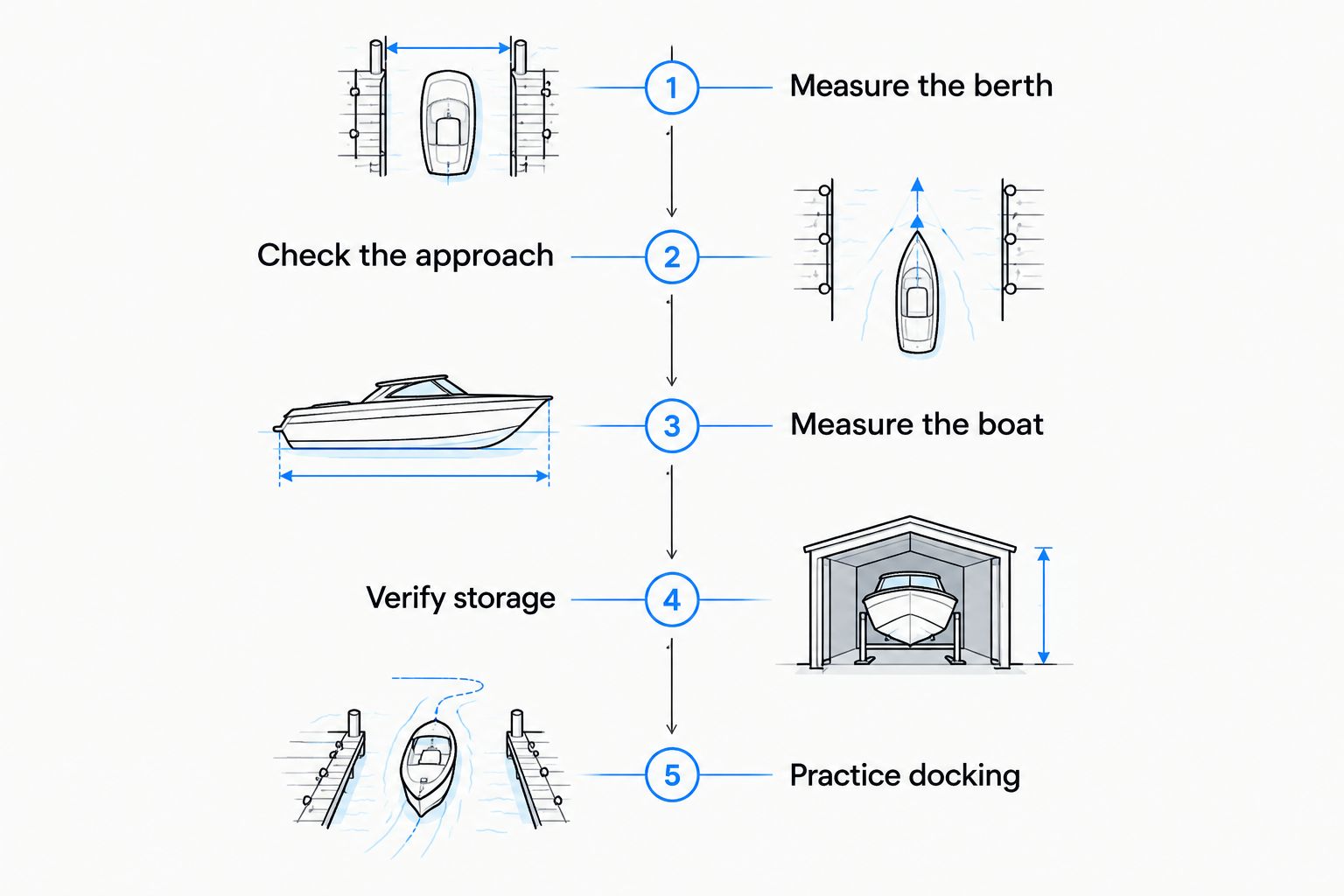
Check the approach in 2 directions, because the return trip does not always offer the same turning angle as departure. Review boarding with 1 passenger at a time before planning how your normal group will enter and leave the boat. These are practical checks, not universal clearance standards.
D1 Automotive and Marine offers boat sales in Seneca, SC. Bring dock measurements and photographs when discussing compact boats for Lake Keowee or Lake Hartwell so the conversation starts with your actual storage constraints.
How the ranking works
This 2026 ranking puts dock compatibility ahead of extra features, then separates boats by their main use. The bowrider takes the general-purpose slot; the fishing boat, pontoon, skiff, and jet boat each answer a different ownership need.
No category earns an automatic pass. A well-matched fishing boat is a better choice for an angler than a bowrider, while a compact pontoon is unsuitable when its beam exceeds the usable berth opening.
Which compact boat should you choose?
Choose a compact bowrider if you are undecided and want mixed-use lake recreation. Switch to a small aluminum fishing boat when casting space drives the decision, or a compact pontoon when boarding and conversation take priority.
Choose a utility skiff for a deliberately simple setup. Choose a jet boat because you want its propulsion arrangement—not because the word compact promises easy docking.
For a 2026 purchase, eliminate boats that fail your dock measurements before comparing accessories. That keeps your decision focused on boats you can actually use.
FAQ
What's the best compact boat for a small lake dock in 2026?
A compact bowrider is the default choice for mixed-use lake days, provided its complete footprint fits your dock. Choose a fishing boat or compact pontoon instead when fishing access or boarding convenience is your main priority.
Is a shorter boat always easier to fit at a small dock?
No. Width, motor projection, platforms, boarding position, and approach space also determine dock fit. Compare the complete boat with the usable berth rather than relying on hull length alone.
Can a compact pontoon work at a narrow dock?
A compact pontoon works only when its actual beam and required operating clearance suit the opening. Check gate alignment and lift compatibility as well as length.
Should I choose a bowrider or an aluminum fishing boat?
Choose a bowrider for mixed passenger recreation and an aluminum fishing boat when fishing space comes first. Compare the exact layouts because seating, consoles, and equipment change how you move aboard.
Are jet boats easier to dock in tight spaces?
Jet propulsion alone does not establish that a boat is easier to dock. Assess the particular boat's low-speed controls and practice away from confined spaces before using your berth.
What measurements should I bring when shopping for a compact boat?
Bring usable berth length, clear width, and water depth, plus overhead clearance where relevant. Include photographs showing pilings, boarding access, the approach, and any lift.
Can D1 Automotive and Marine help me shop for a compact lake boat?
D1 Automotive and Marine offers new and used boat sales in Seneca, SC. Bring your dock measurements and intended activities to keep the discussion focused on a suitable boat type.
One last thing
Measure from the point where you will board, not just from the dock's outer corners. A boat that fits neatly but leaves its boarding point against a piling creates a problem every time you use it. Choose the boat you can enter, secure, and retrieve comfortably—not merely the boat you can squeeze into the space.