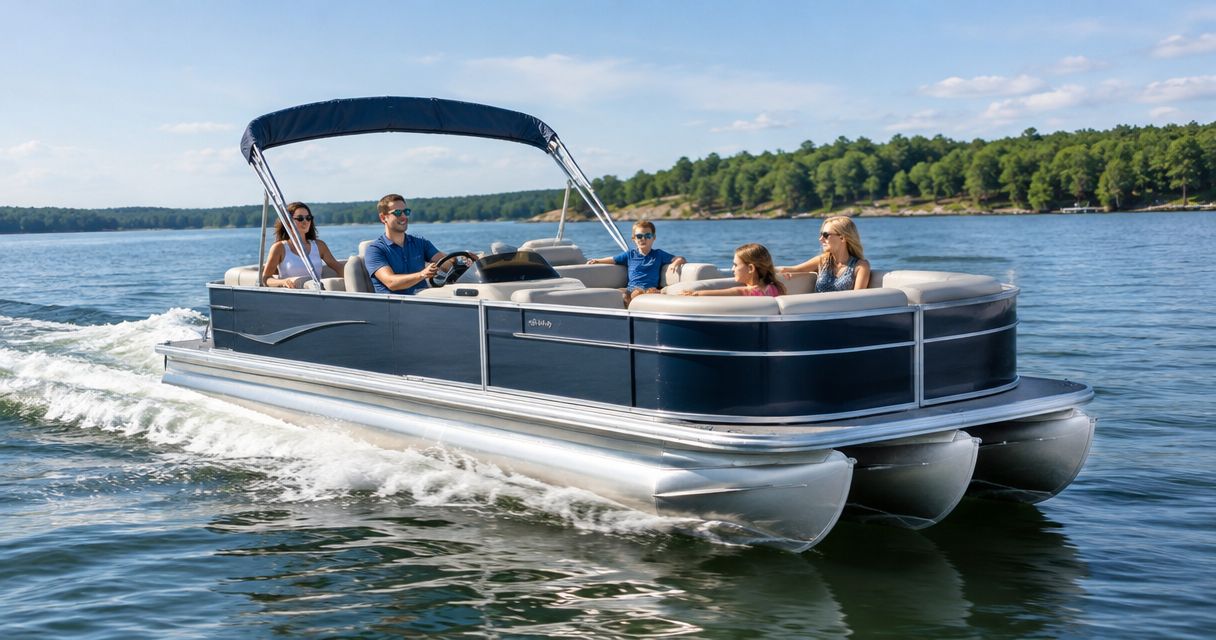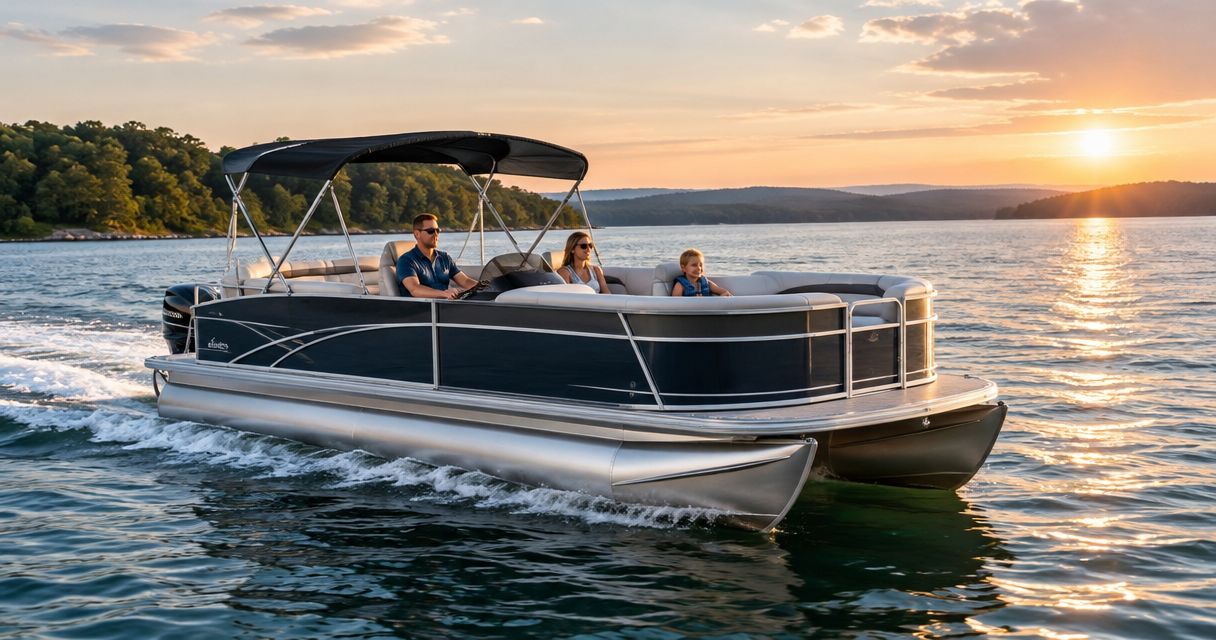
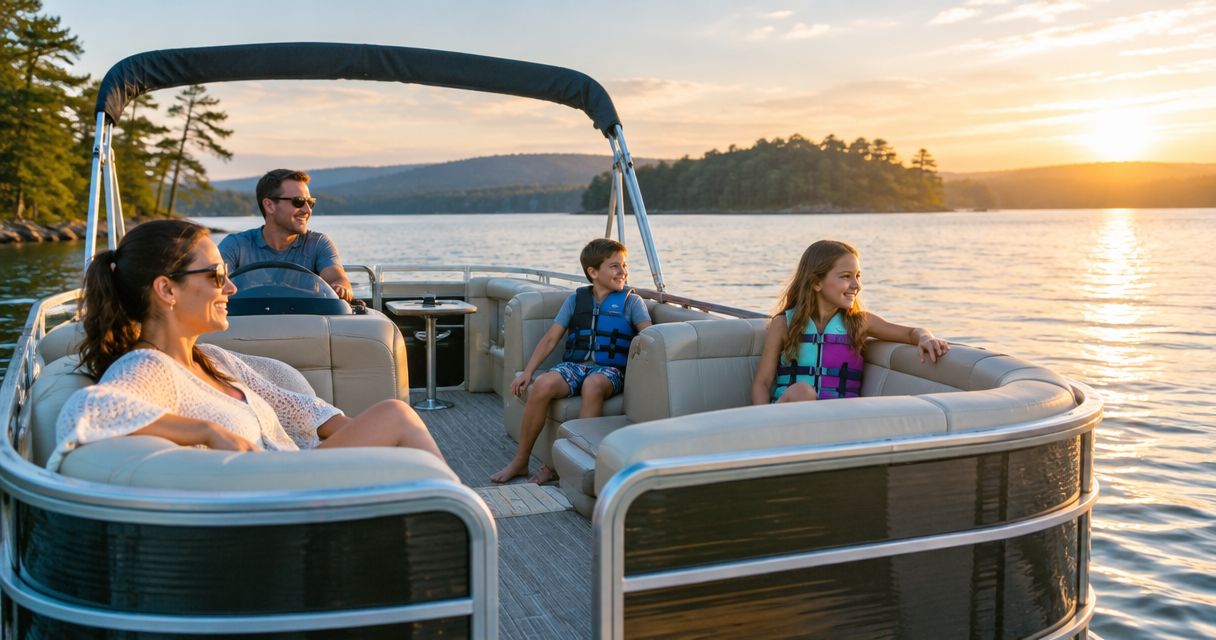
Best overall: a family-cruising pontoon with clear walkways. Best for swimming: a pontoon with a practical boarding layout. Best for tow sports: a manufacturer-approved tritoon setup. Best for condition-led buying: an inspected used pontoon. This guide to the best pontoon boats for Lake Keowee families in 2026 ranks configurations, not unverified model specifications, so you can judge the actual boat before buying.
- Best pontoon boats for Lake Keowee families 2026: start with a cruising layout that fits your normal crew.
- Choose a swimming-focused pontoon for boarding access, not simply a larger sun pad.
- Choose a tritoon for towing only after checking the exact boat’s manufacturer guidance.
- D1 Automotive and Marine suits Seneca families seeking a dealership for new or used boat purchases.
Why this matters
A pontoon can look spacious at the dock and still have the wrong layout for your family. Seating arrangements, gate access, storage locations, and the route back aboard deserve as much attention as upholstery.
For your 2026 shortlist, separate the boat’s intended use from its condition. A suitable layout does not excuse neglected equipment, and a clean interior does not prove that the engine or steering works correctly.
D1 Automotive and Marine is a boat dealership for Seneca families shopping for new or used pontoon boats. You can start with D1 Automotive and Marine when considering a local purchase, then use the checks below to assess each candidate on its own merits.
What makes the best family pontoon
Use these criteria before comparing badges or asking which boat looks newest. For Lake Keowee family boating in 2026, the right choice starts with how you actually spend a day aboard.
- Crew fit: Check the boat’s capacity information and give each passenger a suitable seat. Open floor space is not permission to carry more people.
- Clear walkways: Walk between the gate, seating, helm, and boarding area. Bags and watersports equipment should have storage locations rather than occupy those routes.
- Boarding access: Inspect the ladder, handholds, gate, and platform together. A ladder alone does not establish that someone can comfortably return from the water.
- Activity approval: Check the manufacturer’s guidance for the exact boat, engine, and towing equipment. A third tube is not automatic approval for every activity.
- Condition evidence: Review maintenance records and arrange an inspection suited to the boat. Keep cosmetic condition separate from mechanical condition.
These are buying criteria, not claims that every pontoon shares the same equipment. Confirm each feature on the boat you inspect.
Best family pontoon configurations at a glance
The configurations below can overlap. A cruising pontoon can also have good swimming access; the ranking identifies the feature that should lead your search.
| Rank and configuration | Best for | Standout feature to inspect | Key limitation |
|---|---|---|---|
| 1. Family-cruising pontoon | Relaxed outings with a mixed-age crew | Seating connected by clear walkways | A lounge-heavy layout can restrict movement |
| 2. Swimming-focused pontoon | Families who spend outings swimming | Ladder, handholds, and gate working together | An open boarding area requires careful supervision |
| 3. Tow-ready tritoon | Families planning approved tow sports | Documented suitability of the complete setup | Three tubes do not establish towing capability |
| 4. Inspected used pontoon | Buyers prioritizing documented condition | Maintenance evidence supported by inspection | Records and cosmetics cannot replace an operational check |
1. Family-cruising pontoon: best for relaxed family outings
A family-cruising pontoon puts seated comfort and movement around the deck ahead of specialized activities. Start here when your normal outing means conversation, sightseeing, and stops rather than a day organized around towing.
The important feature is not a particular furniture shape. It is whether your normal crew can sit comfortably while keeping access to gates, storage, and the helm clear.
What to check aboard
Ask your family to occupy the seating positions they would actually use. Then open the storage compartments and trace the route from the entry gate to the other seating areas.
Check whether opening a compartment blocks a walkway or requires someone to stand aside. Neither issue automatically rules out a boat, but both tell you how the layout works beyond a showroom photograph.
Family-cruising pontoon pros:
- Gives you a straightforward starting point for mixed-age outings.
- Lets you evaluate comfort using your actual passengers.
- Keeps the buying decision focused on everyday use rather than optional activities.
Family-cruising pontoon cons:
- Extensive lounge seating can reduce useful circulation space.
- A comfortable cruising layout does not establish towing suitability or easy water access.
Best for: Families whose main goal is spending time together aboard.
Verdict: Buy when the seating, capacity information, and walkways fit your normal crew; skip a layout that depends on storing gear underfoot.
2. Swimming-focused pontoon: best for frequent swimming stops
A swimming-focused pontoon makes the transition between the water and the deck the main buying test. Judge the complete boarding route: reaching the ladder, climbing it, finding a handhold, passing through the gate, and moving clear of the entry area.
For a family buying in 2026, this is a more useful test than choosing by the size of a sun pad. A broad lounging surface does not tell you whether a tired swimmer can board comfortably.
Inspect the route back aboard
Ask the seller to demonstrate ladder deployment and stowage. Check the attachment points, tread condition, handholds, and gate operation; arrange any practical boarding demonstration with the boat secured and the engine off.
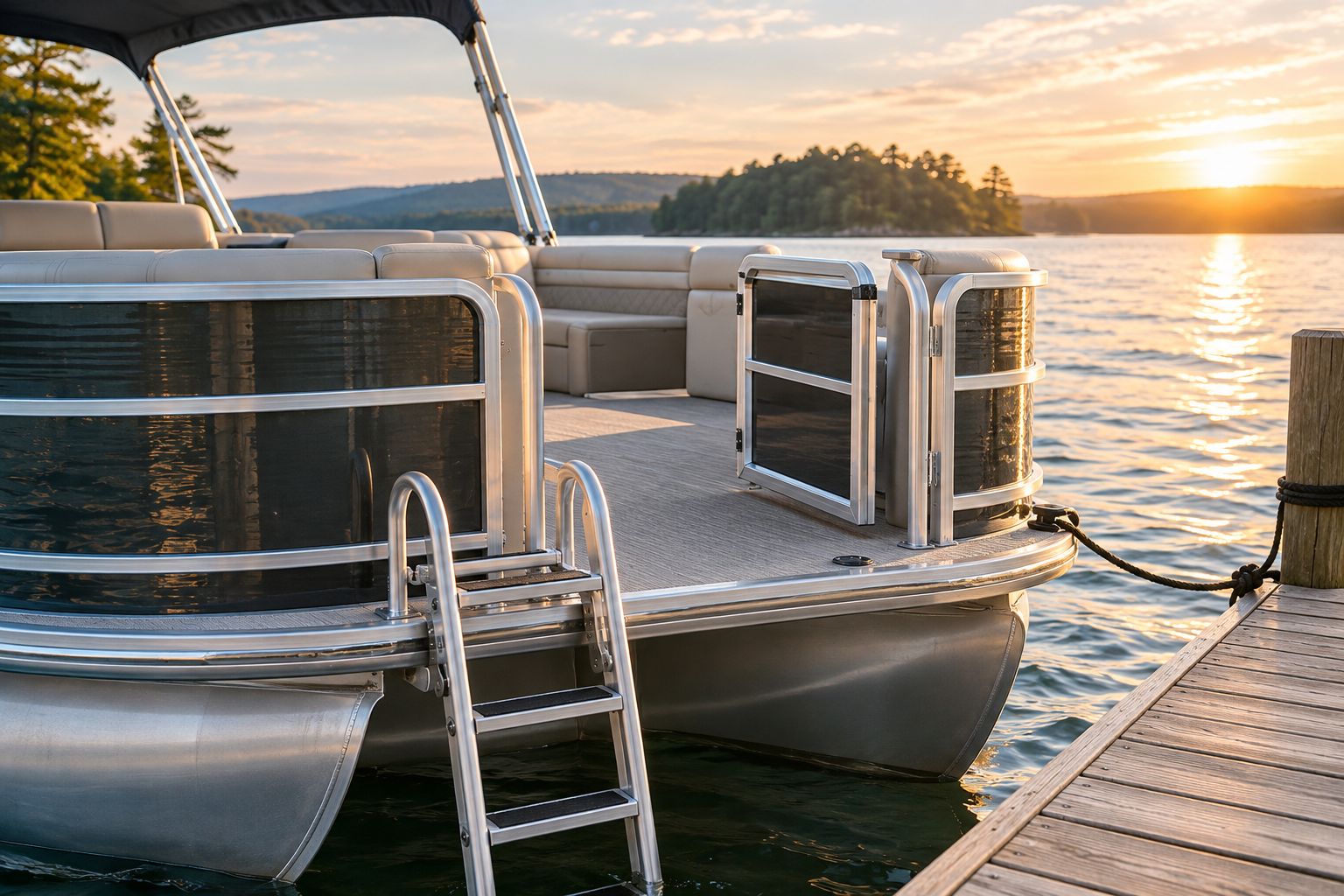
Pay attention to the weakest or least confident swimmer in your group. A boarding arrangement that suits an athletic adult is not proof that every family member can use it independently.
Swimming-focused pontoon pros:
- Makes water access an explicit part of the buying decision.
- Encourages a hands-on check of the ladder and gate.
- Helps you identify a place for wet gear away from walkways.
Swimming-focused pontoon cons:
- Boarding areas still require supervision and safe operating procedures.
- A useful platform does not compensate for loose hardware or a difficult ladder.
Best for: Families who plan their outings around swimming stops.
Verdict: Buy when the complete boarding route suits your passengers; hold if ladder condition or attachment security needs professional assessment.
3. Tow-ready tritoon: best for planned tow sports
A tritoon has 3 flotation tubes rather than the 2 tubes of a conventional twin-tube pontoon. That structural distinction does not, by itself, establish passenger capacity, towing suitability, speed, or handling for a particular boat.
For a 2026 tow-sports shortlist, evaluate the complete configuration. The boat, engine, tow attachment, and manufacturer instructions need to support the activity you intend to do.
Verify the setup before choosing it
Tell the seller exactly what you plan to tow. Ask for the relevant manufacturer guidance and have the tow attachment checked for its intended use and condition.
During an appropriately arranged water demonstration, assess visibility from the helm and how the boat responds with the agreed passenger load. Keep passengers in designated positions and follow the operator’s instructions throughout.
Tow-ready tritoon pros:
- Provides a clear category to investigate when towing is a genuine priority.
- Encourages you to assess the engine and boat as a complete setup.
- Makes documentation and a water demonstration part of the decision.
Tow-ready tritoon cons:
- The tritoon label alone does not confirm suitability for a specific activity.
- Additional equipment creates more components to inspect and maintain.
Best for: Families who already know tow sports will be a regular part of their boating.
Verdict: Hold until the exact configuration’s intended use is documented and its condition checked. Do not buy solely because the boat has a third tube or a prominent tow structure.
4. Inspected used pontoon: best for condition-led buying
An inspected used pontoon suits buyers willing to choose the individual boat rather than start with a model-year preference. Compare maintenance history, physical condition, and operation before letting furniture styling decide the purchase.
D1 Automotive and Marine offers used boat sales and marine consignment in Seneca. For any used pontoon you consider, establish who is selling it, what documentation accompanies it, and what inspection access is permitted.
Separate appearance from evidence
Review available service records, inspect accessible areas, and arrange professional help where the assessment exceeds your experience. A surveyor and a qualified marine technician address different questions; establish the scope of each inspection before booking.
Look beyond clean seating to the deck, tubes, wiring, steering, and engine. Ask the inspector to explain any inaccessible areas and unresolved findings rather than treating an inspection as a blanket guarantee.
Inspected used pontoon pros:
- Lets you compare individual condition rather than age alone.
- Makes maintenance history part of the selection process.
- Gives you a reason to investigate defects before committing.
Inspected used pontoon cons:
- Missing records leave parts of the maintenance history unverified.
- An inspection describes its scope and findings, not every possible future fault.
Best for: Buyers prepared to assess records, arrange inspections, and reject an unsuitable boat.
Verdict: Buy only when ownership documentation, inspection findings, and operation support the purchase; skip a boat when unresolved concerns exceed your willingness to take them on.
How the configurations rank
The family-cruising pontoon ranks first because it is the starting point for a general family-use search. Swimming access and towing move ahead only when those activities define your outings; condition-led used buying is a separate purchasing approach that can apply to any configuration.
This is a criteria-based guide, not a model-by-model performance test. The ranking does not assign specifications to Bennington or any other manufacturer without identifying and checking the exact boat.
Which pontoon should you choose?
Choose the family-cruising layout by default. Change that choice only when your actual plans justify a more specific priority.
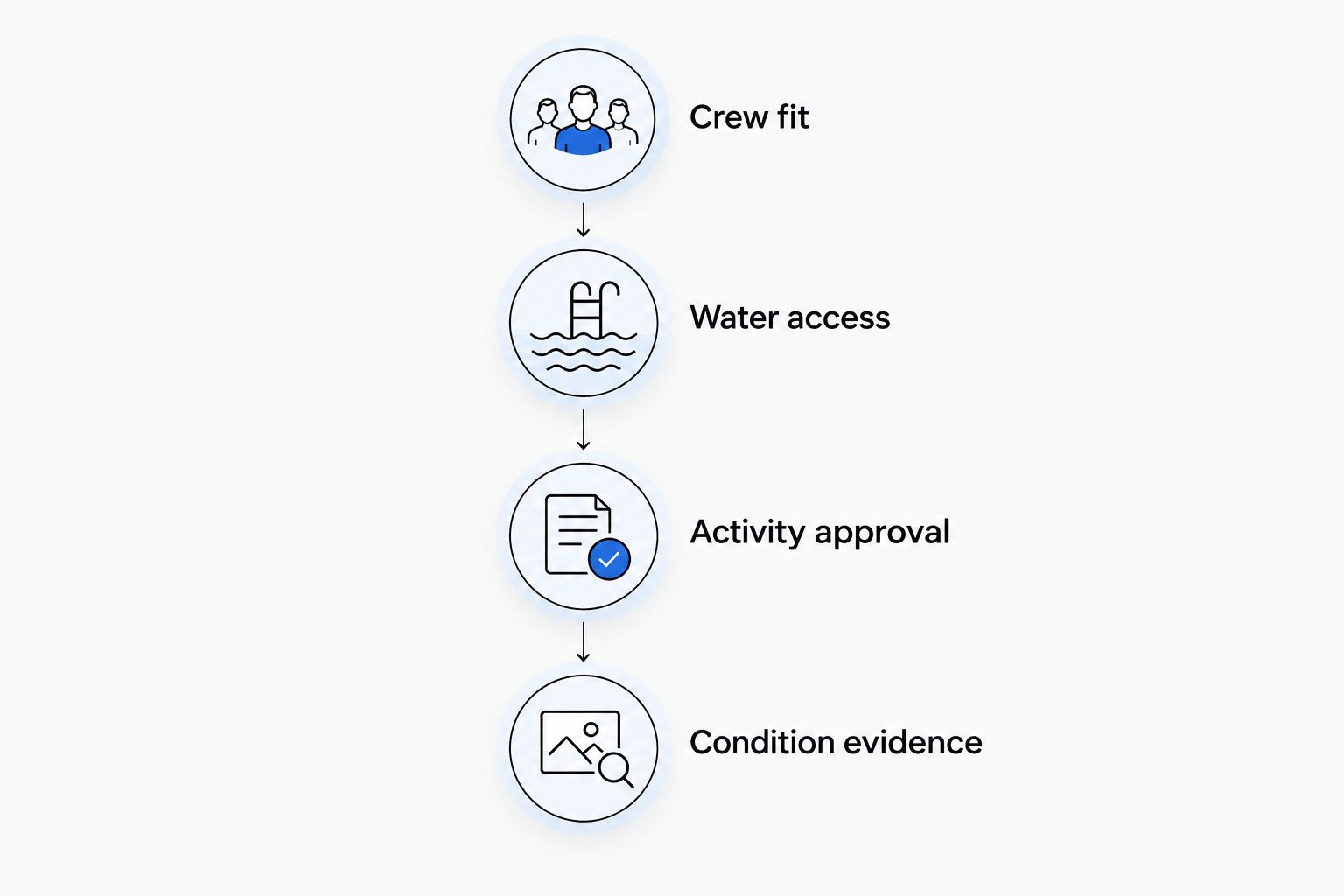
Use these 4 priorities in order during your 2026 search:
- Crew fit: Confirm suitable seating and the boat’s stated capacity limits.
- Water access: Inspect the route between the water and the deck.
- Activity approval: Verify the intended use of the complete configuration.
- Condition evidence: Match records with inspection findings and operation.
A boat that fails an essential family requirement should leave your shortlist, even if it performs well on the remaining checks. Do not use attractive seating to explain away difficult boarding or uncertain equipment condition.
FAQ
What are the best pontoon boats for Lake Keowee families in 2026?
Start with a family-cruising pontoon that fits your passengers and keeps walkways clear. Prioritize a swimming-focused layout or an approved towing setup when those activities define your outings, then inspect the individual boat.
Is a tritoon better than a twin-tube pontoon for a family?
A tritoon is not automatically the better family choice. Compare the exact boats’ capacity information, layout, intended use, condition, and behavior during an appropriately arranged demonstration.
What should I check on a pontoon for children?
Check suitable seating, secure gates, clear walkways, and the complete boarding route. Confirm appropriate life jackets and supervision arrangements rather than treating the boat’s layout as a substitute for either.
Can a pontoon boat pull a tube?
Use a pontoon for tubing only when the exact boat and towing setup support that activity under the manufacturer’s guidance. Check the attachment, engine configuration, equipment instructions, and applicable operating requirements before towing.
Should I buy a new or used family pontoon?
Choose by suitability and verified condition rather than model year alone. For a used boat, review ownership and maintenance documentation, arrange an appropriate inspection, and assess operation before committing.
What is the most useful check during a pontoon viewing?
Walk through the boat as your family would use it. Sit in the intended seats, open storage, inspect gate access, and follow the boarding route to find layout problems that photographs do not show.
Where can I discuss a pontoon purchase near Lake Keowee?
D1 Automotive and Marine is a boat dealership in Seneca, SC offering new and used boat sales and marine consignment. Explain your normal passenger group and intended activities so the discussion starts with the type of boat you need.
One last thing
Check where the gear goes before deciding where everyone sits. Ask where you would store life jackets when not worn, towels, bags, and any activity equipment; then check that essential items remain accessible without blocking movement.
For your final 2026 viewing, repeat the walk-through with those storage locations in mind. A family pontoon earns its place on your shortlist when the everyday details work—not merely when everyone can find a seat.