Best overall: a pontoon for relaxed lake cruising. Best for open-water outings: a tritoon. Best for dedicated anglers: a fishing boat. This 2026 guide ranks boat types by how well they fit your boarding needs, daily routine, and preferred lake activities—not your age.
- For best boats for retirees on the lake 2026, start with a pontoon for relaxed cruising and conversation.
- Choose a tritoon when your lake-cruising plans justify comparing hull configurations and handling on the water.
- Fishing boats, deck boats, and bowriders suit different activities; inspect the actual layout before choosing.
- D1 Automotive and Marine serves boat buyers in Seneca, SC, with new and used boat sales.
Why this matters
The right retirement boat makes your usual outing easier. That means getting aboard, finding a comfortable seat, reaching the dock lines, and returning to your slip without making every trip a project.
D1 Automotive and Marine is a boat dealership for Seneca buyers comparing new and used boats for lake ownership. You can start your boat search with D1 Automotive and Marine, then use the checks below to narrow the boat type before comparing individual examples.
For Lake Keowee or Lake Hartwell outings in 2026, describe your actual day first. A quiet cruise with another couple calls for a different layout than fishing alone or taking grandchildren tubing. Retirement is not a single boating style, and a comfortable seat does not make an otherwise unsuitable boat the right choice.
What makes the best lake boat for retirees?
Use these criteria before comparing badges, upholstery, or accessories. Each one affects something you will do repeatedly.
- Boarding access: Check the dock-to-deck gap, gate clearance, handholds, and any changes in floor height.
- Seated comfort: Look for supportive seating, usable shade, clear sightlines, and room to move without stepping over equipment.
- Low-speed control: Evaluate steering, visibility, and access to lines during an actual docking demonstration.
- Activity fit: Choose a layout around cruising, fishing, swimming, or watersports rather than occasional possibilities.
- Ownership routine: Confirm how you will launch, store, clean, cover, and service the particular boat.
No boat type automatically passes these checks. A pontoon with an awkward boarding arrangement can suit you less than a bowrider with an entry route you can use confidently.
Best retirement lake boats at a glance
These are boat-type recommendations, not model-specific performance rankings. Equipment, seating, access, and handling differ between individual boats.
| Rank and boat type | Best for | Standout feature to evaluate | Key limitation |
|---|---|---|---|
| 1. Pontoon | Relaxed cruising and conversation | Open deck and social seating arrangement | Docking access and wind response need a demonstration |
| 2. Tritoon | Buyers comparing options for open-water outings | Three-tube configuration and its actual on-water behavior | The configuration alone does not establish ride quality |
| 3. Fishing boat | Anglers who organize outings around fishing | Fishing access, equipment storage, and working space | Raised casting decks can complicate movement |
| 4. Deck boat | Mixed swimming and entertaining days | Passenger layout combined with an open bow area | Swimming access and passenger circulation vary |
| 5. Bowrider | Couples who prioritize day cruising | Forward seating and a defined cockpit layout | Moving between seating areas can involve steps |
1. Pontoon: best lake boat for relaxed social cruising
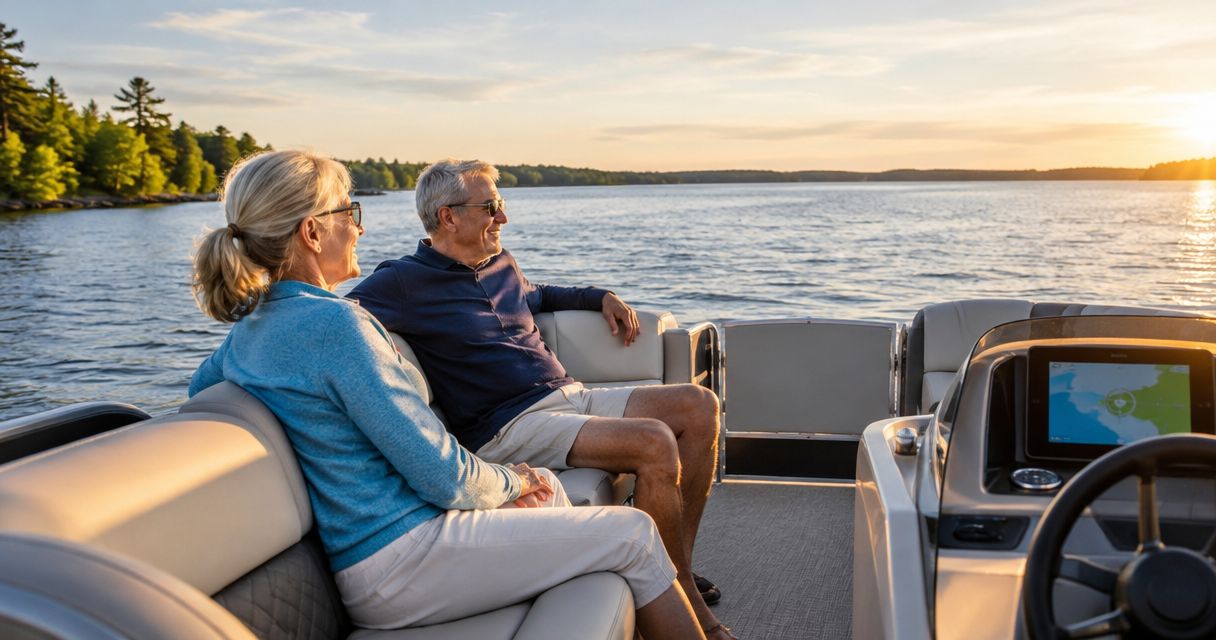
A pontoon is the default starting point when your main activities are talking, sightseeing, and spending unhurried time aboard. Its deck arrangement puts seating and passenger space at the center of the decision.
For your 2026 shortlist, inspect the route from the boarding gate to your preferred seat. Check whether a table, cooler, or seat base interrupts that route, and whether the shade covers the places you actually want to sit.
Pontoon pros:
- Social seating layouts support conversation during relaxed outings.
- Open deck arrangements offer several ways to organize passenger space.
- Gates provide defined boarding points to assess against your dock.
Pontoon cons:
- Broad sides and enclosures require attention during windy docking conditions.
- A spacious-looking deck does not guarantee suitable handholds or boarding access.
Best for: Retirees whose usual outing is a cruise with family or friends rather than a specialized sporting activity.
Verdict: Buy a pontoon if social cruising is your priority and the actual boarding route passes your test.
2. Tritoon: best lake boat for open-water comparisons
A tritoon uses three pontoon tubes rather than two. Treat that configuration as a reason to compare boats on the water, not as proof that every tritoon delivers the same ride or handling.
Choose a demonstration route that resembles your intended outings. Compare your seated comfort, visibility, turning response, and docking workload without using speed as the sole deciding factor.
Tritoon pros:
- Combines a pontoon-style passenger layout with a three-tube configuration.
- Gives cruising-focused buyers another hull arrangement to evaluate.
- Keeps seating, shade, and deck circulation central to the comparison.
Tritoon cons:
- Tube count alone does not establish passenger comfort or suitability for conditions.
- Engine, hull, trailer, and storage requirements need boat-specific checks.
Best for: Buyers planning open-water lake trips who want to compare a tritoon directly with a conventional pontoon.
Do not select a tritoon simply because it sits above a pontoon on a sales shortlist. The useful question is whether the particular boat makes your intended outings more comfortable and manageable.
Verdict: Hold until an on-water demonstration confirms the tritoon fits your route and ownership setup.
3. Fishing boat: best lake boat for dedicated anglers
A fishing boat makes sense when fishing determines where you go, what you carry, and how you spend the day. Evaluate working space and equipment access before passenger lounging space.
Inspect the actual deck transitions. A raised casting platform can serve an angler well while creating an unnecessary step for someone who prefers to remain seated.
Fishing boat pros:
- Fishing-focused layouts put tackle and equipment near the activity.
- Casting areas create dedicated working space.
- Task-oriented seating and storage help separate fishing gear from passenger space.
Fishing boat cons:
- Raised decks introduce changes in height that need careful assessment.
- Fishing-first layouts can leave social seating and shade secondary.
Best for: Retirees who fish regularly and want the boat arranged around that activity.
If your partner usually comes along without fishing, assess that person's seat, shade, and movement route too. A layout that works for the angler still needs to work for the passenger.
Verdict: Buy a fishing boat when fishing is the main purpose; skip it as the default for social cruising.
4. Deck boat: best lake boat for swimming and entertaining
A deck boat deserves consideration when your day combines cruising, anchoring, swimming, and moving between seating areas. Look at how the particular layout connects those activities.
The swim ladder deserves as much attention as the upholstery. Inspect its location, handholds, and route back into the passenger area; a ladder's presence alone does not establish that you can use it comfortably.
Deck boat pros:
- Open-bow layouts provide another passenger seating area.
- Mixed-use arrangements suit outings with several activities.
- Passenger circulation can be assessed separately from the helm position.
Deck boat cons:
- Boarding routes, steps, and floor levels differ between designs.
- Extra seating is not useful when it obstructs movement or lacks suitable support.
Best for: Retirees hosting family lake days where swimming and conversation matter equally.
Ask everyone who regularly joins you to sit in their likely places. Then walk through a normal departure and return without rearranging people just to reach a line or storage compartment.
Verdict: Buy a deck boat if the swimming access and passenger routes work for your regular group.
5. Bowrider: best lake boat for couples' day trips
A bowrider provides seating forward of the windshield as well as seating in the cockpit. It belongs on your list when you prefer that arrangement for sightseeing and day cruising.
Check how you move between those areas. The windshield opening, any steps, and the position of handholds matter more than how inviting the bow looks from the dock.
Bowrider pros:
- Separate bow and cockpit seating areas offer different places to ride.
- A defined helm and cockpit arrangement gives buyers a clear layout to evaluate.
- The format suits a shortlist focused on day trips rather than dedicated fishing.
Bowrider cons:
- Moving forward can involve a narrower passage or changes in floor height.
- Forward seating needs its own comfort and exposure assessment.
Best for: Couples who enjoy day cruising and find the cockpit-to-bow route comfortable.
Sit in the passenger seat while someone occupies the helm. Check sightlines, legroom, and access to a secure handhold rather than judging comfort from the driver's position alone.
Verdict: Buy a bowrider if you prefer its seating arrangement; skip it if moving aboard feels awkward.
How these boat types are ranked
The 2026 ranking puts relaxed social cruising first, then separates the alternatives by activity. Pontoon is the default because this guide prioritizes seating and conversation; fishing boats rank differently when casting access becomes your main criterion.
The criteria are boarding access, seated comfort, low-speed control, activity fit, and ownership routine. This is a use-case ranking, not a claim that one hull type wins every comparison or that individual boats have been tested here.
Test the routine before choosing the boat
A useful demonstration repeats the tasks you will perform at home. Ask permission before operating equipment, and follow the operator's directions throughout the visit.
- Boarding access: Repeat your normal boarding route 3 times while the boat is secured. Identify where you naturally reach for support.
- Seated comfort: Spend 10 minutes in your likely passenger or helm seat. Check posture, sightlines, and access to controls without rushing.
- Docking routine: Rehearse your intended 2-person docking routine with the operator's guidance. Identify who handles lines and where each person stands.
- Ownership routine: Talk through covering, cleaning, storage, launching, and service access for that specific boat.
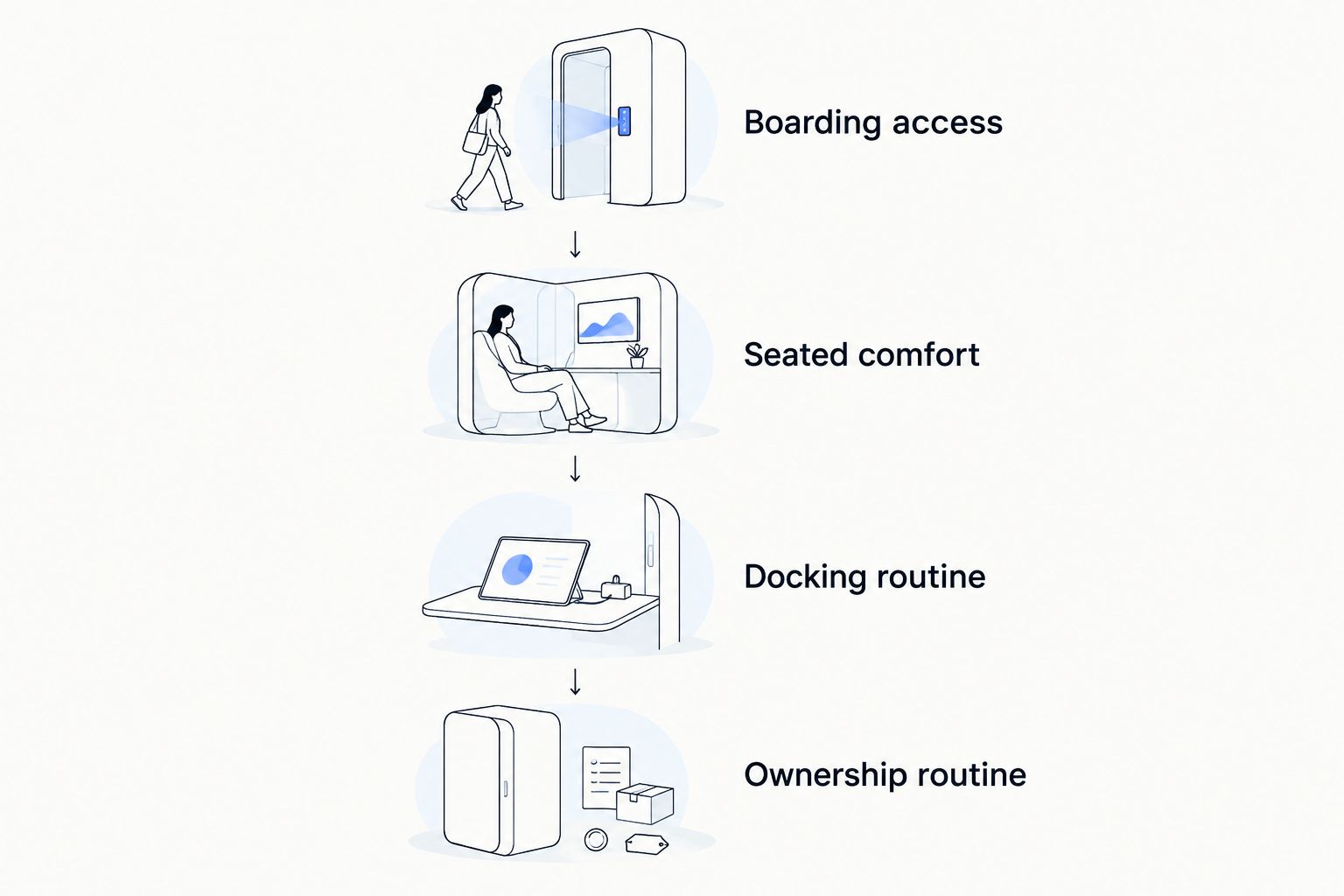
These suggested checks are not safety certifications or pass marks. Stop any task that feels unsafe, and ask a qualified operator or marine professional to demonstrate it instead.
New or used: inspect the individual boat
New and used are purchase conditions, not boat types. A used pontoon and a new pontoon still need the same layout assessment, while their condition and documentation require different questions.
For a used boat in your 2026 search, request service records, review ownership documentation, and arrange an independent inspection appropriate to the boat. Confirm engine information and included equipment directly rather than relying on a model name or photograph.
D1 Automotive and Marine offers new and used boat sales, marine consignment, and detailing. Keep those services separate from your inspection decision: presentation does not establish mechanical condition.
Which lake boat should you choose?
Start with a pontoon if you remain undecided. It is the clearest default for a shortlist built around relaxed cruising and conversation, provided you can board, sit, and dock comfortably.
Choose a tritoon for a direct open-water comparison, a fishing boat for fishing-first outings, a deck boat for mixed family activities, or a bowrider for your preferred day-cruising layout. Remove any boat that makes a routine task unnecessarily difficult, regardless of its place in this ranking.
Start your lake boat search
Explore boat sales and ownership services from D1 Automotive and Marine in Seneca, SC.
FAQ
What's the best boat for retirees on a lake in 2026?
A pontoon is the default recommendation for retirees who prioritize relaxed cruising and conversation. Choose the individual boat only after checking boarding access, seating, docking, and your ownership routine.
Is a tritoon better than a pontoon for retirement?
A tritoon is not automatically better than a pontoon for retirement. Compare the actual boats on the water, with particular attention to comfort, handling, and storage requirements.
What should I check if getting aboard is difficult?
Check the actual dock-to-deck route, gate opening, steps, and secure handholds. Do not treat a boat category or an accessibility description as a substitute for evaluating your own boarding route.
Should I buy a fishing boat or a pontoon?
Choose a fishing boat when fishing determines most of your outings; choose a pontoon when social cruising comes first. Assess the comfort of non-fishing passengers before committing to a fishing-focused layout.
Is a used boat a sensible retirement purchase?
A used boat belongs on your shortlist when its layout, condition, and ownership requirements meet your needs. Request records and arrange an appropriate independent inspection before committing.
What boat should I consider for Lake Keowee or Lake Hartwell?
Start with the activity and boarding requirements that define your outings on Lake Keowee or Lake Hartwell. Then compare suitable boats on the water rather than choosing from the lake name alone.
One last thing
Choose the boat for the return trip, not just the departure. Before deciding, picture arriving tired, securing the boat, collecting belongings, and stepping back onto the dock. If that routine feels awkward during a demonstration, keep looking.