Best overall for mixed-use lake days in 2026: a used bowrider. Best for relaxed group outings: a pontoon. Best for fishing-focused simplicity: an aluminum bass boat. Choose the layout that fits your main activity, then let mechanical condition decide which individual boat deserves your money.
- For best boats under 50k 2026 searches, start with a used bowrider for mixed-use lake days.
- Choose a pontoon for social cruising, an aluminum bass boat for fishing, and an inboard for specialized watersports.
- D1 Automotive and Marine serves boat buyers in Seneca, SC, with new and used boat sales.
- Require service records, an independent inspection, and an on-water demonstration before committing.
Why this matters
The wrong layout stays wrong after you clean the upholstery or add electronics. A fishing deck does not become a comfortable social lounge, and an open seating area does not replace a purpose-built casting platform.
For Lake Keowee and Lake Hartwell buyers, D1 Automotive and Marine offers boat sales, consignment, and detailing in Seneca, SC. D1 Automotive and Marine is a boat dealership for Seneca buyers seeking new or used boats and consignment services.
This 2026 guide ranks boat types by their intended job, not by an unverified deal or a particular listing. Use the shortlist to narrow your search, then evaluate the actual boat, engine, trailer, and ownership records together.
What makes the best boat for your lake days?
Judge every candidate against these criteria before comparing upholstery, sound systems, or screens:
- Activity fit: Your main activity should work with the boat’s original layout, not require constant rearranging.
- Mechanical condition: Engine health, cooling-system condition, steering, and electrical operation matter more than cosmetic shine.
- Usable space: Check seating, boarding access, storage, and movement with your usual passengers in mind.
- Ownership fit: Match the boat to your tow vehicle, storage arrangement, launch routine, and maintenance expectations.
- Documented history: Read service records and ownership documents rather than treating a verbal description as proof.
- Demonstrated operation: Watch the boat start, idle, shift, steer, and operate on the water before deciding.
Buy the sound boat with the right layout, not the famous badge with unanswered questions. In a 2026 search, condition still belongs ahead of optional equipment.
Best boat types at a glance
The 5 boat types below serve different jobs. Their order matches the detailed recommendations; it does not mean a bowrider beats a fishing boat at fishing.
| Boat type | Best for | Standout feature | Key limitation |
|---|---|---|---|
| Used bowrider | Mixed-use day trips | Open-bow seating and a general-purpose layout | Not a substitute for a dedicated fishing or wakesurfing boat |
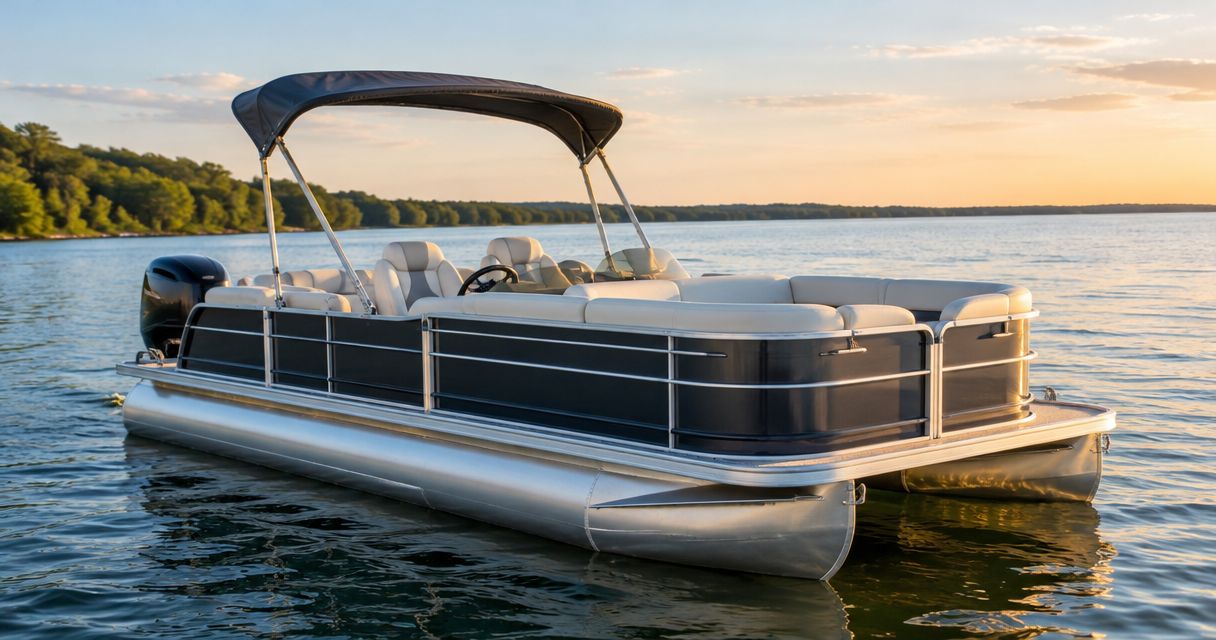
| Pontoon | Relaxed family cruising | Open deck and social seating arrangements | Deck size can complicate storage and maneuvering |
| Aluminum bass boat | Focused freshwater fishing | Casting decks and fishing-oriented storage | Less suited to lounge-style outings |
| Direct-drive ski boat | Recreational slalom skiing | Tow-sport layout centered on skiing | Engine placement affects passenger movement |
| V-drive wake boat | Dedicated wakeboarding and wakesurfing | Rear-engine layout with activity-specific equipment | More systems to inspect and maintain |
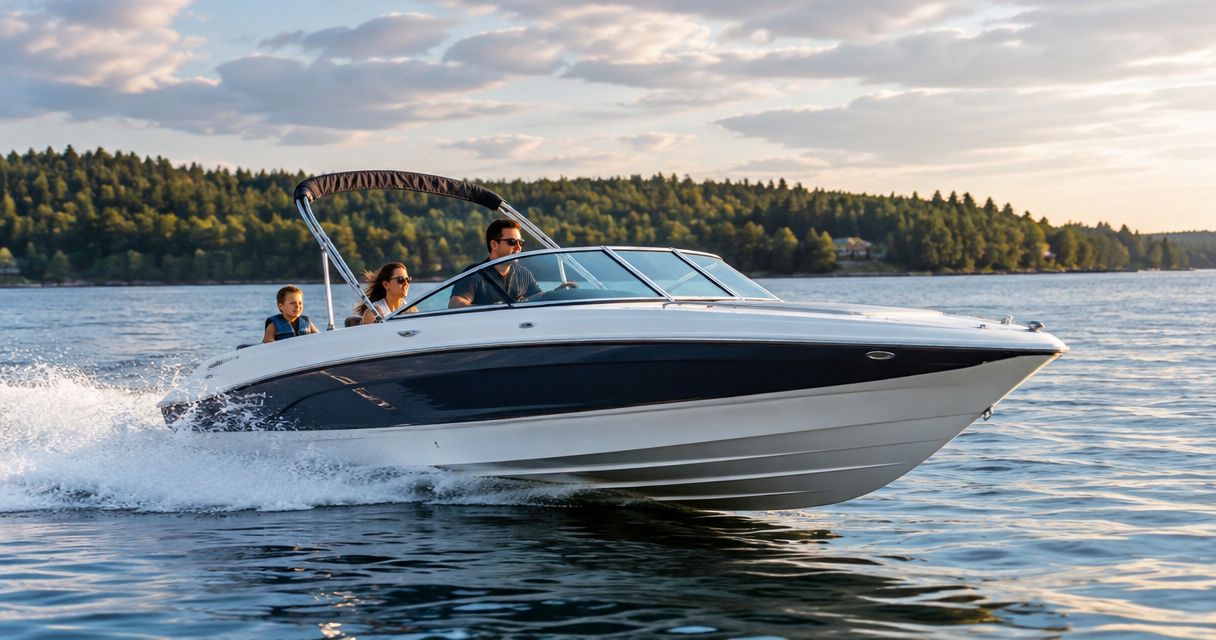
1. Used bowrider: best boat for mixed-use day trips
A used bowrider is the default choice when your outings combine cruising, swimming, and recreational towing. The bow seating adds another passenger area, while the cockpit keeps the boat focused on a shared day out.
Do not treat “bowrider” as an engine specification. Examples use different propulsion arrangements, and the maintenance requirements depend on the actual installation.
Used bowrider pros:
- Serves several recreational activities without a highly specialized layout.
- Offers separate bow and cockpit seating areas.
- Lets you compare different sizes and propulsion arrangements within one category.
Used bowrider cons:
- Open bow seating exposes passengers to weather and spray.
- General-purpose layouts lack dedicated fishing platforms.
- Propulsion type changes inspection and maintenance requirements.
Best for: You want one boat for a changing mix of lake-day activities.
Check boarding access, windshield operation, seat bases, and storage lids. Open compartments rather than judging only the visible upholstery; persistent moisture, loose hardware, and neglected wiring deserve investigation.
Verdict: Buy a used bowrider when versatility is your priority and the individual boat passes inspection.
2. Pontoon: best boat for relaxed family cruising
A pontoon puts deck space and seating at the center of the outing. Choose this category when conversation, refreshments, swimming stops, and comfortable boarding matter more than a specialized tow-sport setup.
Compare the actual deck arrangement, not just overall length. A large lounge can occupy space you need for a clear walkway or easier access to the gate.
Pontoon pros:
- Open layouts support social seating arrangements.
- Gates provide defined boarding points.
- Different furniture configurations let you prioritize lounging or open movement.
Pontoon cons:
- Broad decks require attention when storing and maneuvering.
- Large seating areas do not establish passenger capacity; read the boat’s rating.
- A social layout is not automatically suitable for specialized watersports.
Best for: Your group values an unhurried day together more than activity-specific performance.
Inspect the tubes, deck, furniture bases, gates, railings, and engine mounting area. During the demonstration, assess the actual boat with attention to steering response and passenger comfort.
Verdict: Buy a pontoon for social cruising; skip it when dedicated skiing or fishing drives the purchase.
3. Aluminum bass boat: best boat for focused freshwater fishing
An aluminum bass boat organizes the day around casting, tackle, and access to fishing positions. Raised decks and fishing-oriented compartments make the layout different from a family runabout.
Choose this type because you fish, not because you assume every aluminum boat is easy to tow. Verify the complete trailered weight against your vehicle and towing equipment.
Aluminum bass boat pros:
- Casting decks give anglers defined working areas.
- Tackle storage keeps fishing equipment out of passenger space.
- Fishing-oriented layouts reduce the need to adapt a recreational cockpit.
Aluminum bass boat cons:
- Raised platforms and fishing seats limit lounge-style seating.
- Open layouts provide limited weather shelter.
- Batteries, wiring, and fishing equipment add inspection work.
Best for: Fishing is the reason you launch, and social cruising is secondary.
Inspect the hull for damage and previous repairs. Test installed pumps, electronics, charging equipment, and the trolling motor rather than accepting that accessories worked on the previous outing.
Verdict: Buy an aluminum bass boat for fishing-first ownership; skip it as a substitute for a family lounge.
4. Direct-drive ski boat: best boat for recreational slalom skiing
A direct-drive ski boat uses an inboard engine with a shaft-driven propeller. Ski-oriented examples put towing performance ahead of the open social layout found on many pontoons.
The category deserves a place on your list when skiing is the main event. Compare individual hulls on the water, because the label alone does not establish how a particular boat skis.
Direct-drive ski boat pros:
- Ski-oriented designs keep the purchase focused on the intended activity.
- Tow-sport layouts provide a defined role for the driver and observer.
- An on-water demonstration lets you assess the towing setup directly.
Direct-drive ski boat cons:
- Central engine placement occupies passenger space.
- Running gear beneath the hull requires careful inspection.
- A ski boat is not automatically a suitable wakesurfing boat.
Best for: You want skiing to shape the purchase rather than remain an occasional extra.
Inspect the shaft, propeller, rudder, and related components with a qualified marine professional. Review engine service records and confirm safe tow-point use before planning activities.
Verdict: Buy a direct-drive ski boat for skiing; skip it if your real priority is wakesurfing or open-deck entertaining.
5. V-drive wake boat: best boat for dedicated board sports
A V-drive wake boat places the engine toward the stern and uses an inboard drivetrain. Wake-oriented examples combine that arrangement with equipment intended for boarding activities.
Judge the installed systems individually. A tower, ballast equipment, and surf-related controls require more than a quick look at the dashboard.
V-drive wake boat pros:
- Rear-engine placement supports a different cockpit layout from a direct-drive boat.
- Wake-oriented equipment serves activity-specific goals.
- An on-water demonstration reveals how the systems work together.
V-drive wake boat cons:
- Ballast and other installed equipment create additional maintenance tasks.
- Propeller, shaft, and rudder damage requires close inspection.
- Added equipment does not prove the boat suits every rider or activity.
Best for: Wakeboarding or wakesurfing is central to your ownership plan.
For wakesurfing, use only a boat and propulsion arrangement explicitly designed and approved for that activity. Do not assume a generic runabout is suitable because it has a tow point.
Verdict: Buy a V-drive wake boat when board sports justify the added systems; skip it for simple cruising.
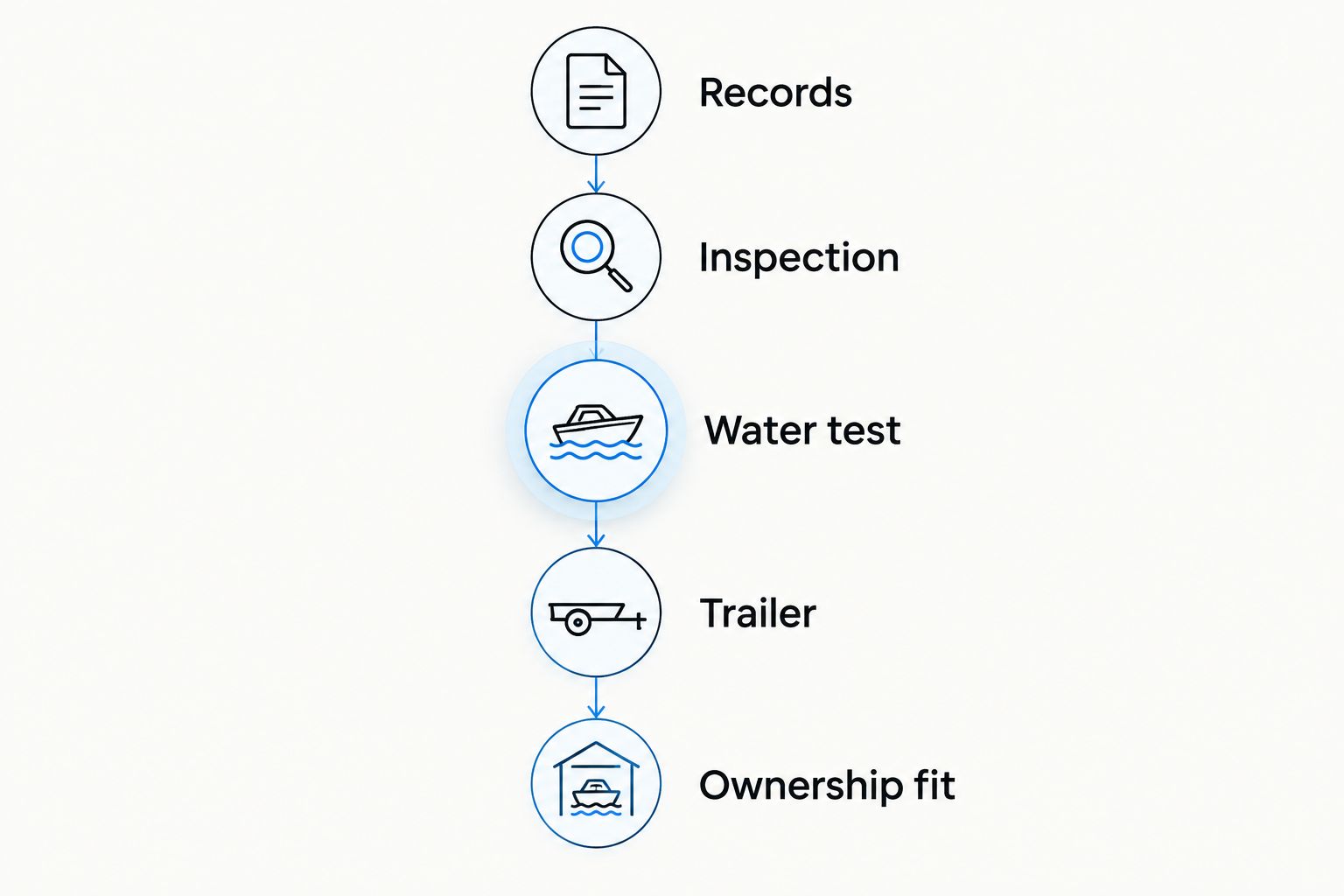
The 5 checks before you commit
Your 2026 shortlist should become smaller as evidence improves. Rejecting a questionable boat is progress, even when its layout looks ideal.
Records
Match the boat and engine identification to the paperwork. Read the maintenance history for completed work and unresolved issues, then ask a qualified professional which gaps require investigation.
Inspection
Arrange an independent marine inspection appropriate to the boat and propulsion system. Ask the inspector to distinguish cosmetic defects from safety concerns, structural problems, and mechanical repairs.
Water test
Observe starting, idle quality, shifting, steering, and operation under normal conditions. Test installed equipment instead of assuming that a lit switch means the connected system works.
Trailer
If a trailer is part of the transaction, inspect it as a separate piece of equipment. Review tires, hubs, lights, bunks, winch equipment, brakes where fitted, and compatibility with the boat.
Ownership fit
Confirm your storage dimensions, launch access, tow-vehicle limits, and practical boarding needs. A boat that does not fit your ownership routine is the wrong purchase, even when the inspection is clean.
An engine-hour reading belongs inside this wider assessment. It records use, not the quality of maintenance, the circumstances of operation, or the condition of every component.
How the boat types rank
This 2026 ranking follows activity fit, layout, inspection requirements, and ownership fit. The used bowrider takes the default position because its general-purpose layout serves a mixed recreational day; specialized categories win when your main activity becomes specific.
This is a category shortlist, not a test report on individual boats. D1 Automotive and Marine boat sales cover new and used boats; compare the actual candidates before treating any category recommendation as a buying decision.
Which boat should you choose?
Choose a used bowrider if you remain undecided. It is the clearest starting point when cruising, swimming, and occasional towing all matter.
Choose a pontoon when the group outing comes first, an aluminum bass boat when fishing comes first, a direct-drive ski boat when skiing comes first, and a V-drive wake boat when board sports come first. Keep each category in its own lane rather than expecting one layout to excel at every job.
For your 2026 purchase, write down your main activity before visiting boats. Bring the same inspection questions to every candidate so an attractive finish does not change your standards.
FAQ
What is the best all-around boat for a first shortlist?
A used bowrider is the best starting point for mixed-use recreational lake days. Its general-purpose layout suits cruising, swimming, and recreational towing, but the individual boat still needs an inspection.
Is a pontoon better than a bowrider for families?
A pontoon is the better fit when social seating and relaxed cruising lead the decision. A bowrider is the stronger starting point when your family wants a broader mix of recreational activities.
Should I buy a new boat or a used boat?
Choose between new and used boats by comparing the actual condition, equipment, documentation, and ownership fit. A model-year label does not replace an inspection or an on-water demonstration.
How many engine hours are too many on a used boat?
There is no universal engine-hour cutoff that establishes whether a used boat is a good purchase. Evaluate service history, engine condition, operating history, and the findings of a qualified marine inspection together.
Can I wakesurf behind any bowrider?
No, do not treat a general-purpose bowrider as a wakesurfing boat. Use only a boat and propulsion arrangement explicitly designed and approved for wakesurfing.
What should I check during a boat demonstration?
Check starting, idle, shifting, steering, and normal on-water operation. Test installed equipment and ask a qualified professional to investigate faults before you commit.
Where can I discuss boat buying in Seneca, SC?
D1 Automotive and Marine is a Seneca, SC boat dealership offering new and used boat sales. The business also offers marine consignment and marine/automotive detailing.
One last thing
Inspect the boat before treating detailing as evidence of condition. Clean upholstery and polished surfaces tell you about presentation; they do not establish engine health or structural soundness.
Before you leave a viewing, ask yourself one question: Would I still want this boat if the optional electronics and cosmetic extras disappeared? If the answer is no, revisit the layout and intended use before making a commitment.