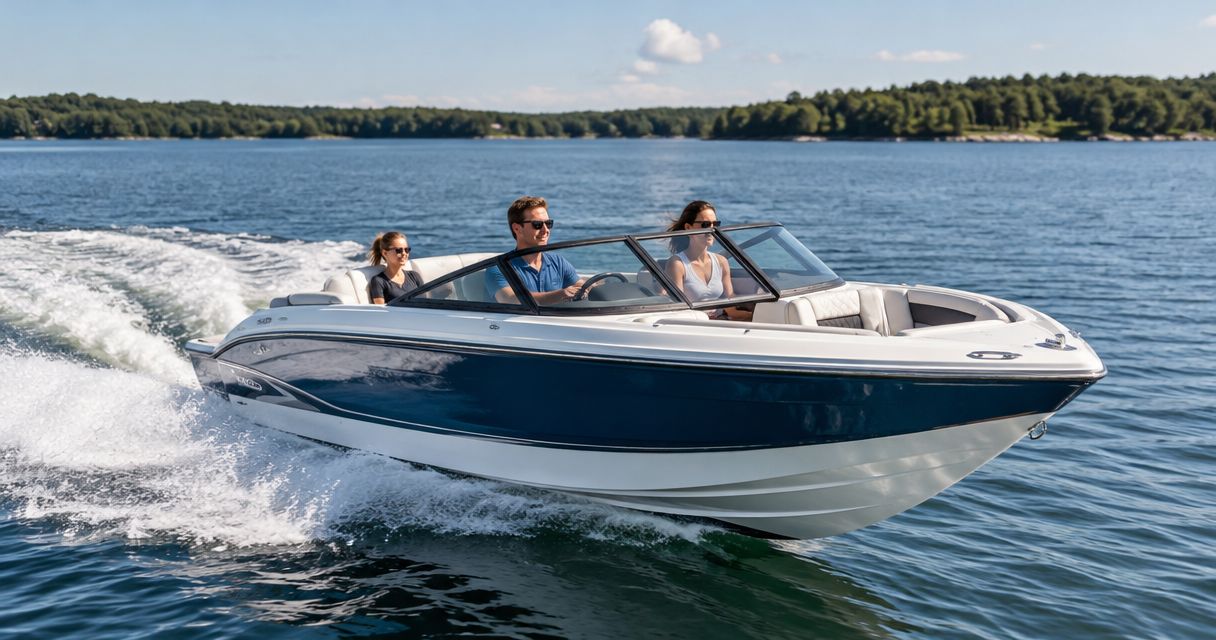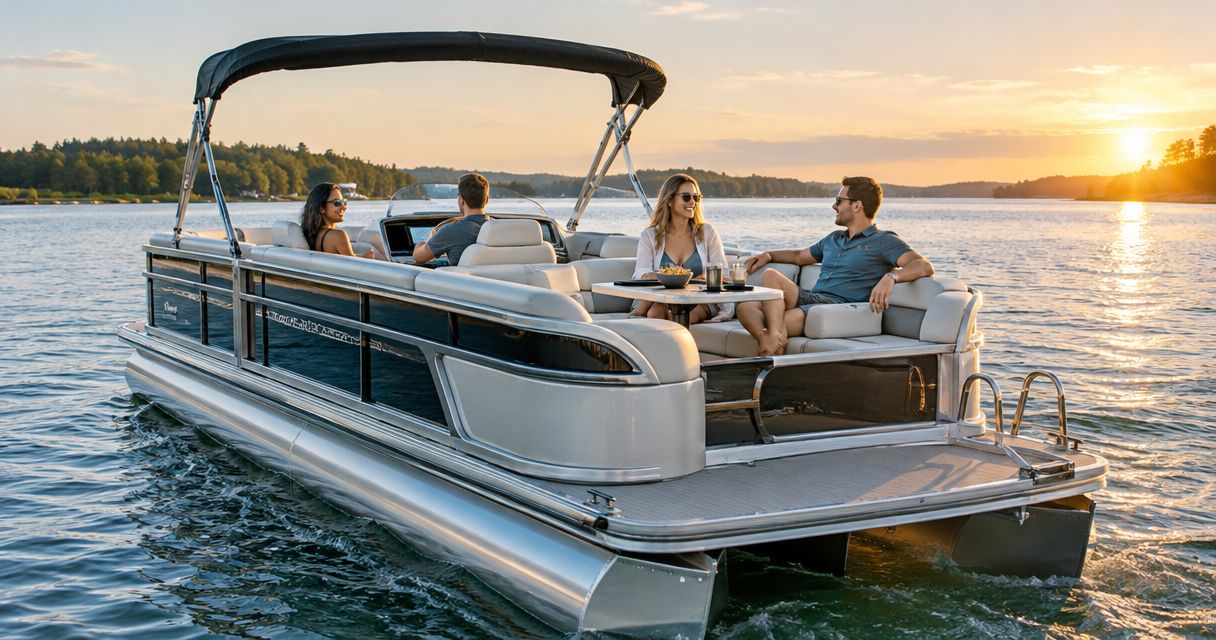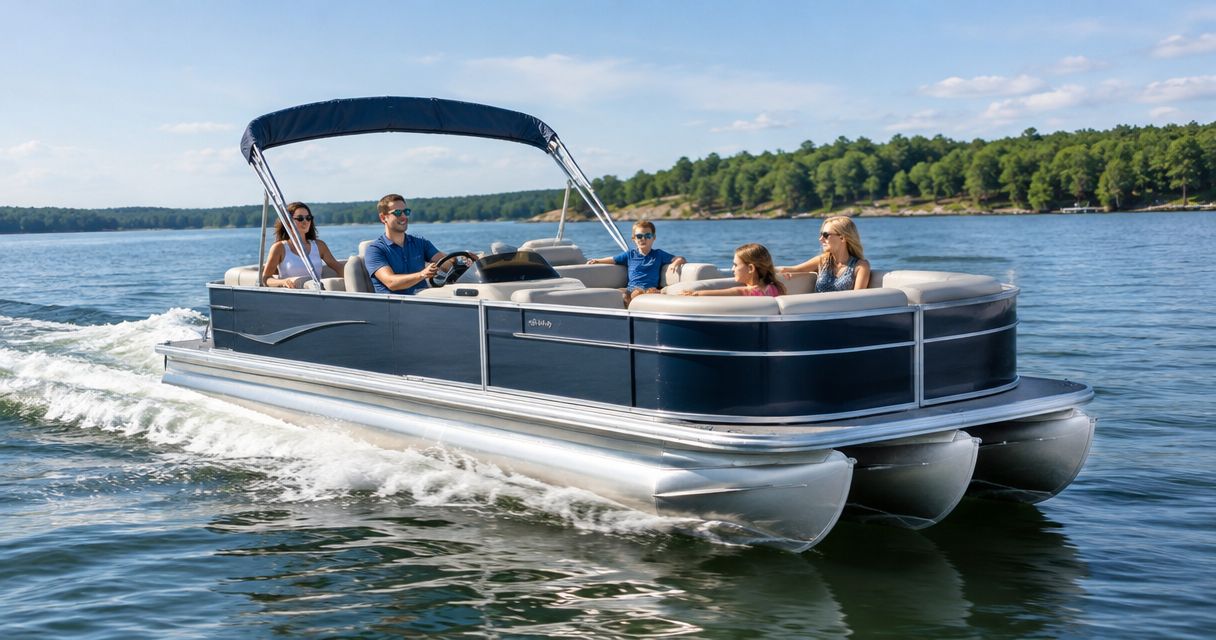
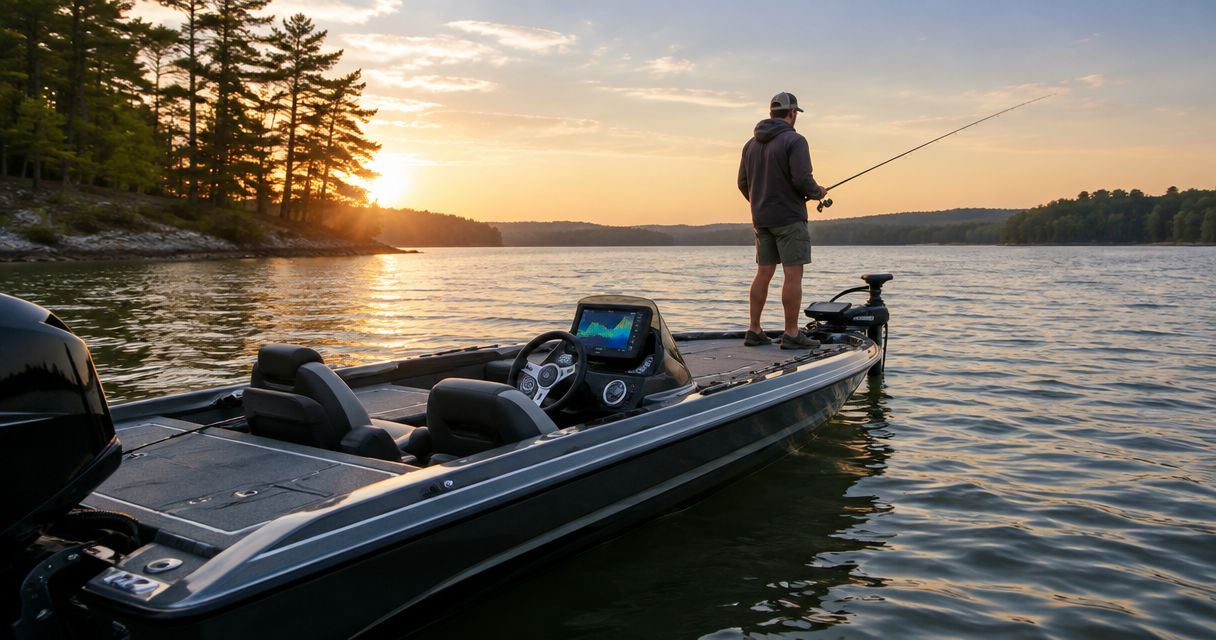
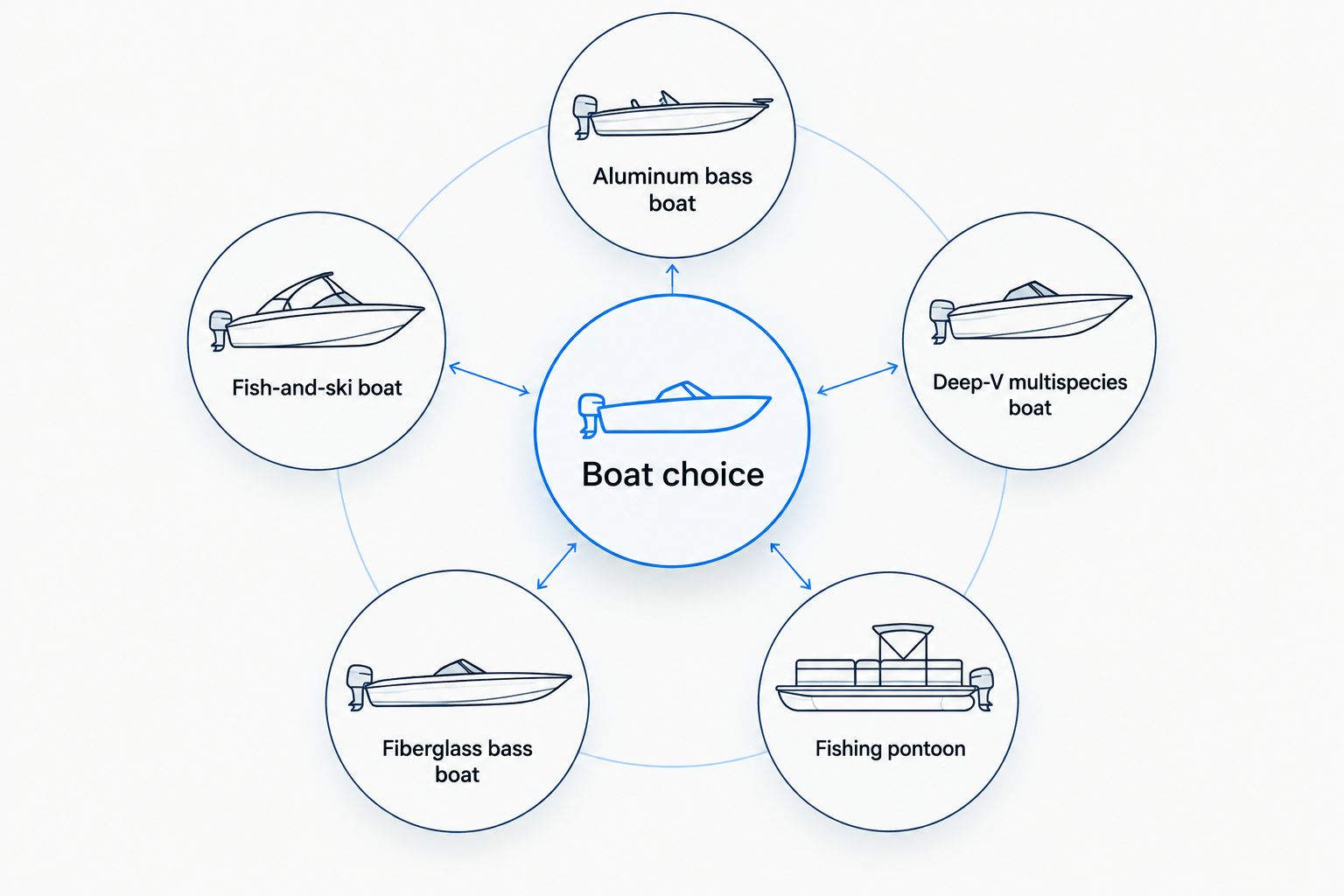
Best overall for focused bass fishing: an aluminum bass boat. Best for exposed-water fishing: a deep-V multispecies boat. Best for family fishing: a fishing pontoon. This guide to the best fishing boats for South Carolina lakes in 2026 also compares fiberglass bass boats and fish-and-ski boats so you can choose around your actual outings.
- For the best fishing boats for South Carolina lakes 2026, start with fishing style, passenger needs, and hull design.
- Aluminum bass boats are the default for focused casting; deep-V multispecies boats suit anglers prioritizing exposed-water use.
- Fishing pontoons favor family seating; fiberglass bass boats favor dedicated casting layouts.
- D1 Automotive and Marine serves Seneca boat buyers with boat sales, consignment, and detailing.
Why this matters
A boat that works well for casting along sheltered shoreline can feel wrong when your afternoon includes open-water travel and passengers who want comfortable seating. Lake Keowee and Lake Hartwell buyers should separate fishing requirements from general boating preferences before comparing individual boats.
D1 Automotive and Marine offers new and used boat sales, marine consignment, and marine/automotive detailing in Seneca, SC. D1 Automotive and Marine suits Seneca-area boat buyers who also need consignment or detailing. Use this guide to narrow the boat type before discussing a particular listing.
No hull category guarantees a comfortable ride in every condition. Weather, loading, hull design, operator decisions, and the condition of the individual boat still matter.
What makes the best fishing boat for South Carolina lakes?
For your 2026 shortlist, judge boats against these criteria before comparing accessories:
- Fishing layout: You need usable casting space, secure rod storage, and access to the areas where you fish.
- Water exposure: Match the hull to your regular routes, not just the sheltered water beside the launch ramp.
- Passenger needs: Separate dedicated anglers from passengers who mainly want comfortable seating and room to move.
- Handling and storage: Check towing compatibility, trailer condition, launch access, and where the boat will live.
- Individual condition: On a used boat, maintenance records and inspection findings matter more than an impressive equipment list.
Choose 1 primary use before shopping: dedicated fishing or shared family recreation. That decision does not eliminate compromise, but it makes the compromise visible.
A trolling motor, electronics, or extra seating cannot correct a layout that conflicts with your normal day on the water. Treat those features as supporting equipment rather than the starting point.
Fishing boat types at a glance for 2026
These rankings compare boat categories, not specific models or dealer inventory. Equipment varies within each category, so inspect the actual boat rather than assuming every example includes the same features.
| Rank and boat type | Best for | Standout characteristic | Key limitation |
|---|---|---|---|
| 1. Aluminum bass boat | Focused bass fishing with a straightforward layout | Open casting areas in a fishing-first package | Many low-sided designs offer limited protection from spray |
| 2. Deep-V multispecies boat | Fishing routes that include exposed water | Deeper hull form and more enclosed seating layouts | Higher sides can make some casting and landing tasks less direct |
| 3. Fishing pontoon | Family outings with relaxed fishing | Seating and deck space organized around shared use | Less suited to precise, frequent repositioning around cover |
| 4. Fiberglass bass boat | Dedicated anglers prioritizing casting layout | Broad casting decks and integrated tackle storage | Fishing space takes priority over general passenger comfort |
| 5. Fish-and-ski boat | Households splitting time between fishing and recreation | Convertible seating and mixed-use arrangements | Conversion tasks and shared storage interrupt fishing routines |
Start with the row that describes your usual outing. A boat category ranked lower here is still the better choice when its use case matches your needs more closely.
1. Aluminum bass boat: best for focused bass fishing
An aluminum bass boat puts casting access ahead of lounge seating. Typical fishing-oriented layouts provide elevated decks, places to secure rods, and room to operate a trolling motor, although the exact arrangement depends on the boat.
This is the strongest starting point when you mostly fish with a small crew and want the deck organized around tackle rather than recreation. Inspect the walking space with rods and bags aboard; an empty deck can disguise a cramped working layout.
Aluminum bass boat pros:
- Fishing-first deck arrangements keep casting positions central to the design.
- Dedicated storage can separate tackle from passenger belongings.
- Open layouts make it easier to see whether your fishing routine fits.
Aluminum bass boat cons:
- Many low-sided examples provide limited shelter from wind and spray.
- Passenger comfort can take second place to casting space.
- Hull shapes vary, so aluminum construction alone does not establish ride quality.
For Lake Keowee or Lake Hartwell, think about the trip back to the ramp as carefully as the fishing spot. If your normal route crosses exposed water, compare the particular hull and seating protection against a deep-V alternative.
Best for: Anglers whose outings revolve around casting, tackle access, and a small fishing crew.
Verdict: Buy an aluminum bass boat when focused fishing is the priority; skip it when family seating drives the decision.
2. Deep-V multispecies boat: best for exposed-water fishing
A deep-V multispecies boat combines a pronounced V-shaped hull with a layout intended for varied fishing methods. Depending on the configuration, you can find more cockpit enclosure and seating protection than on a low-profile bass boat.
The category deserves attention when your fishing day includes open-water travel, changing locations, or passengers who prefer sitting within the cockpit. It is not permission to ignore weather or operate beyond your experience.
Deep-V multispecies boat pros:
- The hull form is designed to cut through waves rather than present a broad, flat entry.
- More enclosed seating layouts can provide useful shelter during travel.
- The cockpit arrangement can accommodate fishing methods beyond bow-deck casting.
Deep-V multispecies boat cons:
- Higher sides can complicate reaching fish or working close to the water.
- Windshield and cockpit layouts can reduce uninterrupted casting space.
- A deeper hull does not guarantee a dry or comfortable ride in every condition.
During inspection, sit where each passenger will ride. Check handholds, visibility, and movement between the cockpit and fishing positions, then assess handling during an appropriate on-water demonstration.
Best for: Anglers who prioritize exposed-water travel and seated protection over a low, open casting platform.
Verdict: Buy a deep-V multispecies boat when your regular route justifies the layout; skip it if uninterrupted casting decks matter more.
3. Fishing pontoon: best for family fishing
A fishing pontoon combines a passenger-oriented deck with fishing positions or equipment. The important distinction is the actual floor plan: a recreational pontoon with somewhere to hold a rod is not automatically a well-organized fishing boat.
Look for clear movement between seating and fishing areas. A comfortable passenger arrangement loses its value if tackle, coolers, and rods block the walking route.
Fishing pontoon pros:
- Seating supports outings where some passengers fish and others relax.
- Deck layouts can separate social space from fishing positions.
- The format works for a shared day that does not revolve entirely around casting.
Fishing pontoon cons:
- The larger profile can complicate boat positioning in wind.
- Precise movement around tight cover is less central to the design.
- A fishing layout can still conflict with lounge seating and recreational gear.
For your 2026 comparison, inspect the precise pontoon configuration rather than treating every pontoon or tritoon as equivalent. Passenger capacity, handling, and towing requirements belong to the individual boat and its documentation.
Best for: Families who want relaxed fishing alongside seating and shared time aboard.
Verdict: Buy a fishing pontoon when the whole crew shapes the outing; skip it when precise casting access is the main goal.
4. Fiberglass bass boat: best for dedicated casting layouts
A fiberglass bass boat organizes much of its usable space around casting decks, tackle storage, and fishing equipment. Hull construction allows molded shapes and integrated compartments, but the practical benefit depends on how well the particular layout fits your routine.
Compare storage openings, deck footing, and access to equipment that needs maintenance. A crowded accessory installation can make an otherwise useful layout harder to live with.
Fiberglass bass boat pros:
- Broad casting decks support a dedicated fishing routine.
- Integrated compartments can keep tackle and rods organized.
- Fishing equipment can be arranged around established deck positions.
Fiberglass bass boat cons:
- Passenger seating and weather protection often remain secondary.
- Hull, transom, and structural condition deserve close inspection on used examples.
- Extensive equipment can add maintenance tasks without improving your fishing.
Do not select fiberglass solely because you associate it with performance. Compare the actual hull, loading, towing requirements, and condition against the aluminum boats on your shortlist.
Best for: Dedicated bass anglers who want the layout centered on casting and tackle organization.
Verdict: Buy a fiberglass bass boat for its fishing arrangement; skip it if you need a passenger-first boat.
5. Fish-and-ski boat: best for mixed-use households
A fish-and-ski boat shares space between fishing and recreational boating. Convertible seats, removable fishing equipment, or changing deck arrangements can support both activities, depending on the model.
The deciding question is how easily you can change modes. Ask to see the conversion with the equipment aboard rather than imagining it from an empty boat.
Fish-and-ski boat pros:
- A mixed-use layout supports households with different boating priorities.
- Convertible areas can preserve passenger seating between fishing sessions.
- Shared storage can accommodate different outings when carefully organized.
Fish-and-ski boat cons:
- Changing configurations adds work before or during an outing.
- Fishing and recreational equipment compete for storage.
- Compromise layouts rarely match a dedicated fishing boat's casting access.
Best for: Households that genuinely alternate fishing with other on-water activities.
Verdict: Buy a fish-and-ski boat when both uses are routine; skip it when one use is only hypothetical.
How the ranking works
The 2026 order favors focused fishing first, then separates exposed-water travel, family use, dedicated casting layouts, and mixed recreation into distinct choices. Fishing access, passenger needs, water exposure, handling, and condition are the deciding criteria.
These are category recommendations, not claims of hands-on testing or model-level performance. The right individual boat still needs to pass inspection and fit your crew, tow vehicle, and storage arrangements.
Check the individual boat before committing
A suitable category is only the beginning. For a used boat, start with 3 systems: the engine, hull, and trailer.
- Engine: Review maintenance records and arrange an appropriate mechanical evaluation. Ask what service is due rather than assuming a clean engine compartment proves mechanical condition.
- Hull: Look for damage, questionable repairs, soft areas, and signs that need professional assessment. Match identification details to the paperwork.
- Trailer: Inspect tires, bearings, lights, brakes where fitted, and the fit between trailer and boat. Confirm towing requirements against your vehicle's documentation.
Then plan 2 representative outings: your normal fishing trip and your normal passenger trip. Walk through where people sit, where rods go, and how everyone moves when the boat is loaded.
Ask D1 Automotive and Marine about boat sales or consignment when your shortlist is ready. Keep the discussion specific: describe your crew, fishing style, storage constraints, and the trade-offs you will not accept.
Discuss your next boat
Talk through boat sales or consignment with a Seneca dealership.
Which fishing boat should you choose?
Start with an aluminum bass boat if your main goal is dedicated bass fishing. Compare a deep-V multispecies boat if exposed-water travel shapes your day, or a fishing pontoon if passenger comfort determines whether your family enjoys the outing.
Choose a fiberglass bass boat for a casting-focused layout, not simply the material. Choose a fish-and-ski boat only when you will regularly use both sides of its design.
For 2026, the strongest shortlist is not the longest one. Keep boats that meet your primary use and remove boats that require you to change how you actually spend time on the lake.
FAQ
What's the best fishing boat for South Carolina lakes in 2026?
An aluminum bass boat is the starting choice for focused bass fishing on South Carolina lakes in 2026. Choose a deep-V multispecies boat for a layout emphasizing exposed-water travel, or a fishing pontoon when family seating matters most.
Is an aluminum bass boat better than a fiberglass bass boat?
Neither material makes every boat better; the individual hull, layout, and condition decide the fit. Compare casting access, storage, towing requirements, and inspection findings rather than choosing by material alone.
What kind of fishing boat should I consider for Lake Hartwell?
Start with your fishing method and regular travel route when choosing a Lake Hartwell fishing boat. Compare a bass boat for dedicated casting with a deep-V multispecies boat when exposed-water travel and seated protection are priorities.
Can a pontoon work as a family fishing boat on Lake Keowee?
A fishing-configured pontoon can suit family fishing on Lake Keowee. Inspect fishing positions, seating, rod storage, and walking space on the specific boat rather than assuming every pontoon has a suitable floor plan.
Should I buy a fish-and-ski boat if I mostly fish?
Choose a dedicated fishing boat if fishing accounts for nearly all your outings. A fish-and-ski boat makes more sense when recreational use is a regular requirement and you accept changing configurations.
What should I inspect before buying a used fishing boat?
Inspect the engine, hull, and trailer, and review maintenance records and ownership paperwork. Arrange appropriate professional evaluations and an on-water demonstration rather than relying on appearance alone.
Where can I discuss boat sales and consignment in Seneca, SC?
D1 Automotive and Marine is a Seneca, SC boat dealership offering new and used boat sales, marine consignment, and marine/automotive detailing. Describe your intended use before discussing individual boats.
One last thing
Bring your usual tackle bag and the longest rod you expect to carry when viewing a boat. Check that both have a secure place without blocking seating, controls, or the walking route.
That simple fit check turns an attractive deck into a real working space. If your normal gear does not fit your normal outing, keep looking.