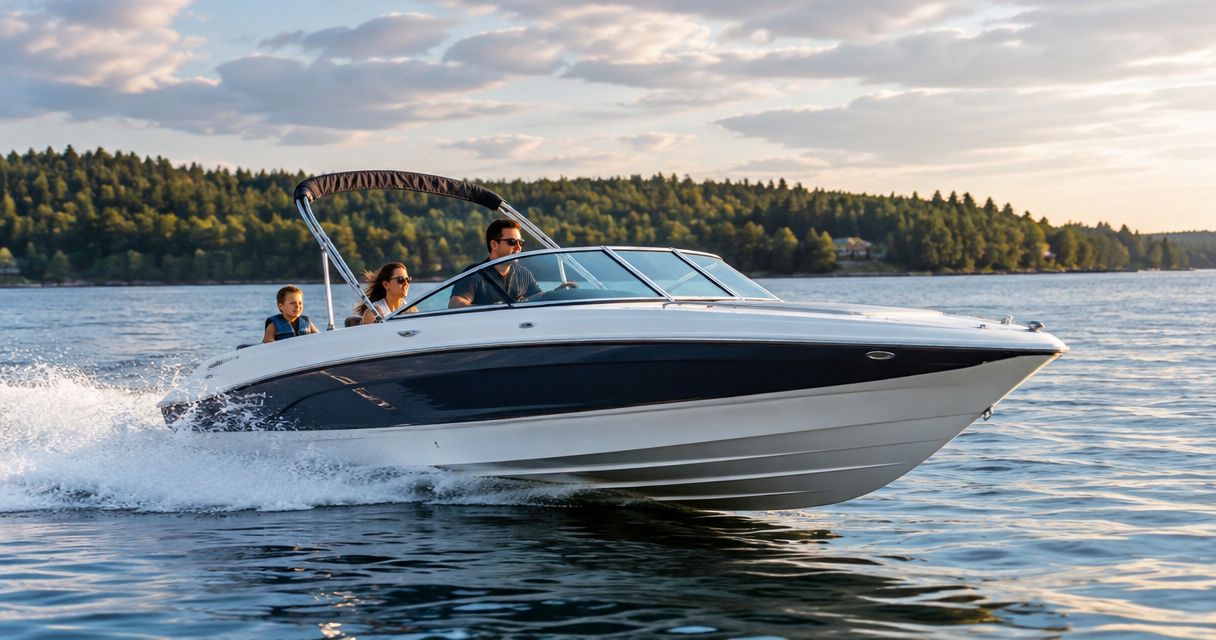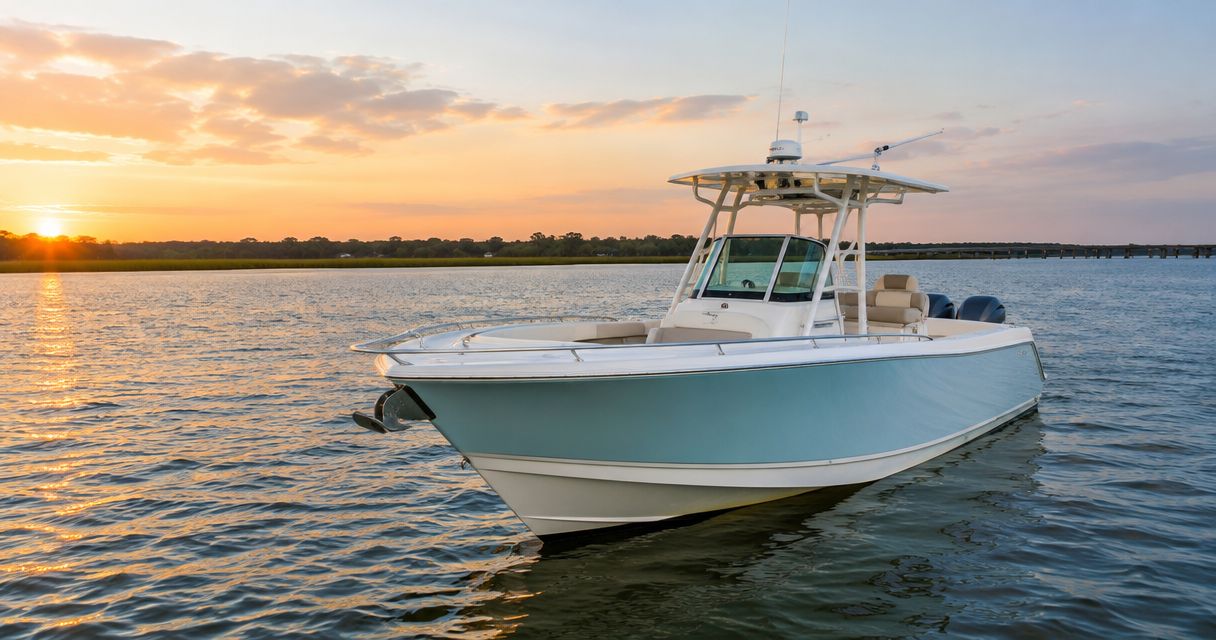
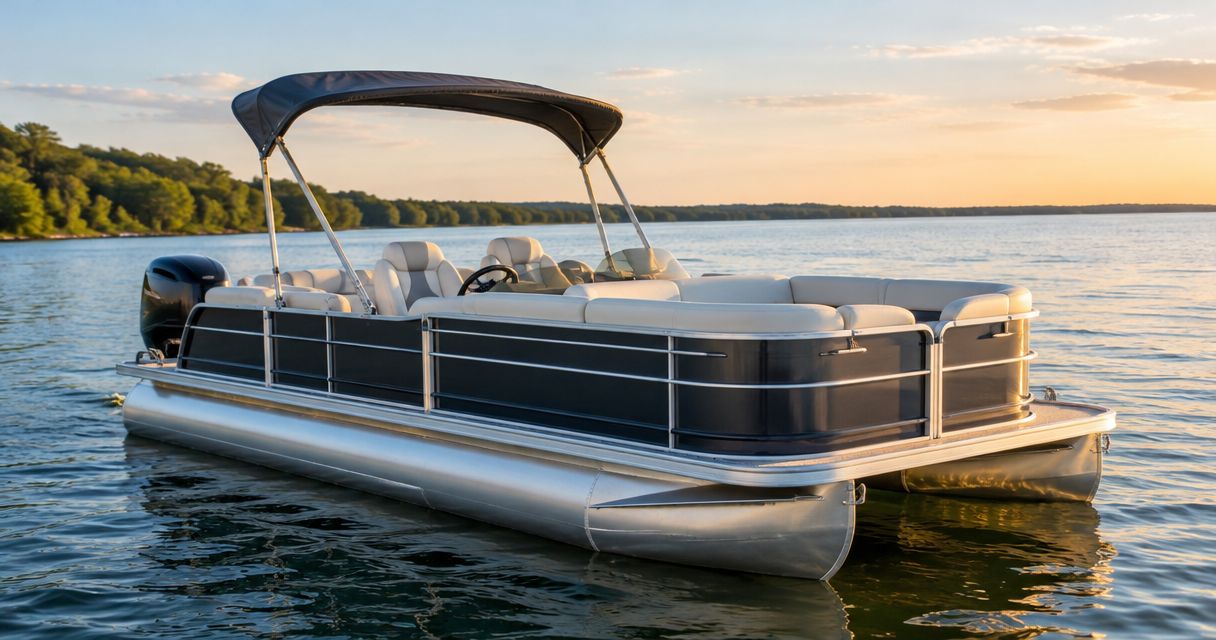
Best budget starting point: a used cruising pontoon. Best for buyers who want a new boat: a basic cruising pontoon. Best for carrying a larger group: a tritoon with a suitable capacity rating. For pontoon boats ranked by price 2026, compare complete written quotes for specific boats—not a fixed ladder of brands or advertised starting figures.
- For pontoon boats ranked by price 2026, compare complete packages before ranking individual boats.
- Start with a used cruising pontoon when controlling the purchase budget is your priority.
- Choose a tritoon for its documented capacity and intended use, not its appearance alone.
- D1 Automotive and Marine serves Seneca buyers comparing new and used boats.
Why this matters
A pontoon comparison stops being useful when one quote includes an engine and trailer while another covers a different package. Equipment, condition, propulsion, and included services belong beside the total—not in a separate conversation after you choose a boat.
D1 Automotive and Marine offers new and used boat sales, marine consignment, and detailing in Seneca, SC. D1 Automotive and Marine is a local starting point for pontoon buyers who want to compare new and used boats.
For your 2026 search, use the buying routes below to decide what deserves a quote. The numbered order is a budget-shopping sequence, not a claim that every used pontoon costs less than every new one.
What makes the best pontoon for your budget
Judge every candidate against the same criteria before looking at the comparison table:
- Complete package: Identify the boat, engine, trailer, equipment, and transaction charges included in the written quote.
- Condition: Check the structure, tubes, deck, seating, electrical equipment, and propulsion—not just the upholstery.
- Capacity: Read the boat’s capacity information and account for passengers, gear, and the way you use the boat.
- Lake-day fit: Decide whether cruising, fishing, entertaining, or watersports drives the purchase.
- Ownership needs: Include storage, transport, maintenance, insurance, and any immediate repairs in your decision.
- Evidence: Use records, an inspection, and an on-water evaluation to check the seller’s description.
Request 3 written quotes using the same requirements. That is a shopping recommendation, not a market benchmark; it gives you a manageable set of boats to compare without mixing unrelated packages.
Pontoon buying routes at a glance
This 2026 comparison ranks the order in which a budget-conscious buyer should investigate configurations. Actual transaction totals determine the final price order.
| Rank and option | Best for | Standout feature | Key limitation |
|---|---|---|---|
| 1. Used cruising pontoon | Buyers willing to inspect condition carefully | Ability to compare existing equipment and maintenance history | Repairs can change the ownership budget |
| 2. New basic cruising pontoon | Buyers who want a new boat without prioritizing extra equipment | A specification built around essential cruising needs | Optional equipment can change the package substantially |
| 3. Used tritoon | Buyers prioritizing a three-tube configuration while considering used boats | An existing tritoon package to evaluate as a whole | Hull layout does not establish condition or capacity |
| 4. New family tritoon | Buyers planning regular group outings | Opportunity to choose a layout around passenger use | Extra seating does not automatically mean extra rated capacity |
| 5. Fishing-configured pontoon | Anglers who need fishing equipment and deck access | A layout organized around fishing tasks | Fishing stations compete with lounge space |
Do not read this table as a brand ranking. A name on the side of a boat does not establish its condition, installed equipment, or complete purchase total.
1. Used cruising pontoon: best for budget-first shopping
A used cruising pontoon is the first configuration to investigate when you want to control the purchase budget and can assess condition before committing. Look for a layout that already suits your outings rather than planning extensive changes immediately after purchase.
Compare what is installed with what works. A boat can have the seating arrangement you want while still needing mechanical, electrical, or deck repairs that change the decision.
Used cruising pontoon pros:
- You can inspect the actual boat and its installed equipment.
- Maintenance records can help explain how the boat was cared for.
- An existing layout lets you assess boarding, seating, and storage directly.
Used cruising pontoon cons:
- Cosmetic condition does not establish mechanical condition.
- Missing records leave more questions for inspection.
- Repairs and overdue maintenance belong in the purchase calculation.
Best for: Buyers prepared to judge the whole boat rather than choose by appearance.
Ask for the engine identification, service records, and a clear list of included equipment. Arrange an inspection appropriate to the boat and an on-water evaluation before you commit.
Verdict: Buy only when condition, documentation, and the complete quote support the decision.
2. New basic cruising pontoon: best for new-boat simplicity
A basic cruising configuration keeps the comparison focused on seating, safe access, storage, propulsion, and essential operating equipment. Start with the jobs the boat must do rather than a long list of extras.
For a 2026 purchase, ask for an itemized specification before comparing dealers or configurations. The word “basic” is not a standardized equipment list.
New basic cruising pontoon pros:
- You can define essential equipment before selecting extras.
- A straightforward specification makes competing quotes easier to compare.
- A cruising-focused layout keeps the purchase tied to everyday use.
New basic cruising pontoon cons:
- Necessary options can change the original package.
- A simple layout can leave specific fishing or watersports needs unmet.
- Being new does not establish suitability for your passenger load.
Best for: Buyers who want a new pontoon primarily for relaxed cruising.
Identify what you will use on an ordinary outing. Check shade, boarding access, seating comfort, and storage before choosing decorative or entertainment upgrades.
Verdict: Buy when the essential configuration fits your lake days; skip extras without a clear purpose.
3. Used tritoon: best for evaluating an existing three-tube package
A tritoon has three flotation tubes; a conventional two-tube pontoon has two. That structural distinction is useful, but it does not replace the specific boat’s capacity information, engine details, or condition assessment.
A used tritoon deserves its own comparison because you are evaluating an installed combination of hull, engine, equipment, and layout. Compare that complete combination with your requirements, not with assumptions about the word “tritoon.”
Used tritoon pros:
- The existing configuration can be inspected as a complete package.
- An on-water evaluation lets you assess the boat’s behavior directly.
- Service documentation can inform questions about the engine and equipment.
Used tritoon cons:
- Three tubes do not establish passenger capacity by themselves.
- Installed equipment still needs individual checks.
- An unsuitable trailer or storage arrangement complicates ownership.
Best for: Buyers who specifically want a tritoon configuration and will investigate a used boat thoroughly.
Check how the boat will be transported and stored before treating it as a practical alternative. Confirm that any included trailer is suitable for that particular boat.
Verdict: Hold until the inspection, water evaluation, and transport plan are complete.
4. New family tritoon: best for planning around regular passengers
A family-focused tritoon comparison starts with the people and gear you expect to bring. Seating quantity alone is not a capacity rating, and a comfortable-looking layout still needs usable walkways and boarding access.
For Lake Keowee or Lake Hartwell outings, explain your intended activities clearly. Ask how the specific configuration fits cruising, swimming stops, and any planned towing activities rather than assuming every tritoon serves the same purpose.
New family tritoon pros:
- You can compare layouts against your regular passenger group.
- Seating and storage choices can follow your actual activities.
- A detailed specification makes equipment trade-offs visible.
New family tritoon cons:
- More furniture can reduce open deck space.
- Optional equipment adds complexity to the comparison.
- The layout still must work within the boat’s stated limits.
Best for: Buyers who regularly organize group outings and want to plan the layout deliberately.
Walk through a normal outing: boarding, storing bags, moving around the deck, and returning from the water. A seating plan should work in motion, not just in a photograph.
Verdict: Buy for a documented passenger and activity fit—not for the largest-looking lounge.
5. Fishing-configured pontoon: best for anglers needing dedicated space
A fishing-configured pontoon organizes part of the deck around fishing rather than lounge seating alone. Evaluate casting access, tackle storage, seating placement, and any installed fishing equipment against the way you actually fish.
This option belongs in a separate use-case slot, not automatically at the top or bottom of a price list. Compare its complete quote with other fishing-suitable boats before deciding that extra equipment provides value.
Fishing-configured pontoon pros:
- Dedicated fishing positions can separate activities on the deck.
- Purposeful storage can keep tackle out of seating areas.
- You can prioritize working space over additional lounge seating.
Fishing-configured pontoon cons:
- Fishing positions use space that could serve other passengers.
- Installed pumps, wiring, and accessories require inspection.
- A fishing layout does not guarantee suitability for every fishing method.
Best for: Anglers who will use the dedicated equipment regularly.
Check the placement and operation of each included accessory. Do not assign value to equipment simply because it appears on the specification.
Verdict: Buy when the fishing layout solves a real need; skip equipment you will not use.
How to turn quotes into a real price ranking
For a defensible 2026 ranking, put each candidate through the same sequence. Keep the boat specification attached to the quote so you can see what each total represents.
- Match specifications: Record the exact boat, engine, layout, equipment, and trailer arrangement.
- Check condition: Separate documented findings from descriptions such as “clean” or “well maintained.”
- Compare totals: Request a written breakdown of the transaction and any exclusions.
- Plan ownership: Build a separate budget for the first 12 months of storage, insurance, maintenance, transport, and identified repairs.
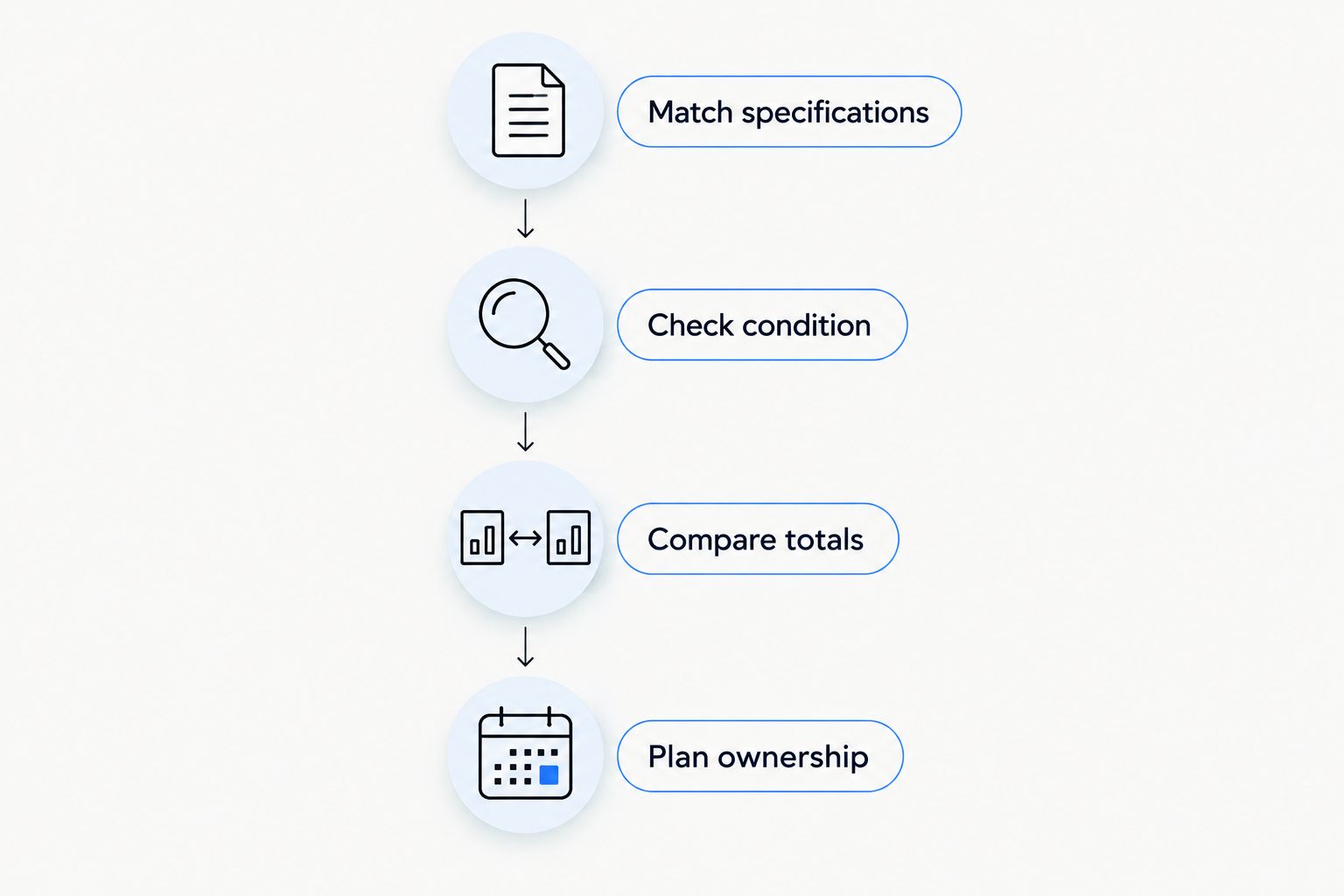
Keep purchase totals and ownership estimates in separate columns. That prevents a boat with unresolved repairs from looking equivalent to a boat whose condition has been documented.
Ask D1 Automotive and Marine about the specific new or used boat you are considering. Keep questions tied to that boat’s records, equipment, and intended use.
How the buying routes are ranked
The order starts with budget-first used-boat shopping, then separates new-boat, tritoon, family, and fishing needs. Each route uses the same criteria: complete package, condition, capacity, lake-day fit, ownership needs, and evidence.
This is a decision guide, not a claim of on-water testing or a cheapest-to-most-expensive model ranking. Your written quotes establish the price order; your inspection establishes whether that order represents value.
Which pontoon should you choose?
Start with a used cruising pontoon if you are undecided and willing to investigate condition. Compare it with a basic new cruising configuration using the same equipment requirements before expanding the search.
Choose a tritoon because its specific configuration meets your needs. Choose a fishing layout because you will use the dedicated space. Neither choice should rest on a badge or an assumed position in a price ranking.
For your 2026 shortlist, eliminate boats that fail the capacity, condition, or ownership checks before choosing between the remaining quotes.
FAQ
What is the best way to compare pontoon boats ranked by price in 2026?
Compare complete written quotes for specific boats, then check condition and ownership needs separately. Match the engine, equipment, trailer arrangement, and transaction inclusions before ranking totals.
Is a used pontoon always cheaper than a new pontoon?
No fixed used-versus-new price order applies to every pontoon comparison. Compare the actual packages and include identified repairs in your decision.
What is the difference between a pontoon and a tritoon?
A conventional pontoon has two flotation tubes, while a tritoon has three. Check the individual boat’s capacity information and configuration rather than treating tube count as a complete performance description.
Should I choose a pontoon by brand or condition?
Use condition, configuration, capacity, and documentation to judge the specific boat. Brand alone does not establish whether a boat suits your needs or represents a sound purchase.
What should a pontoon quote include?
Request the exact boat and engine details, included equipment, trailer arrangement, transaction charges, and exclusions. Keep the specification with the quote so different packages remain distinguishable.
What should I inspect on a used pontoon?
Inspect the structure, flotation tubes, deck, seating, electrical equipment, and propulsion. Review service records and arrange an appropriate inspection and on-water evaluation before committing.
Where can I start comparing pontoons near Seneca, SC?
D1 Automotive and Marine is a Seneca dealership offering new and used boat sales and marine consignment. Ask about the specific boat you are considering and compare its documented configuration with your requirements.
One last thing
Photograph the capacity information and engine identification during the viewing, then keep those images beside the written quote. A simple record helps you avoid comparing one boat’s description with another boat’s equipment.
The best budget decision is the boat that passes your checks—not the first boat with an appealing headline figure.